WHAT KITE FISHING ACTUALLY IS
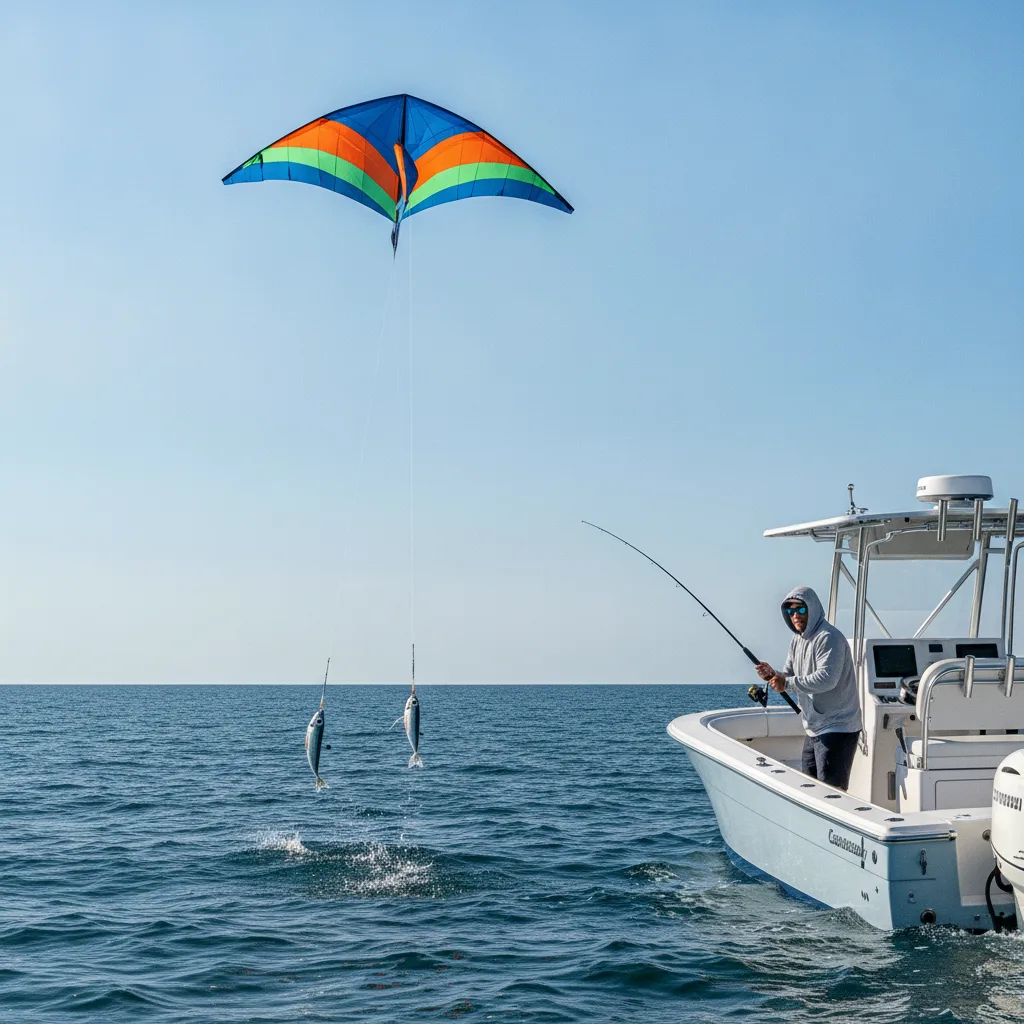
Kite fishing looks strange the first time you see it. We inflate a small fabric kite with helium, fly it off the boat on its own reel, and clip live baits to release clips along the kite line. Two or three baits hang down and dance on the surface.
The kite holds those baits in the top few inches of water. They skip, splash, and panic like they are being chased. There is no leader in the water above them and nothing tipping off the fish.
That presentation is the whole point. A sailfish sees a struggling goggle eye on the surface with clean water all around it. The strike is almost automatic when the conditions are right.
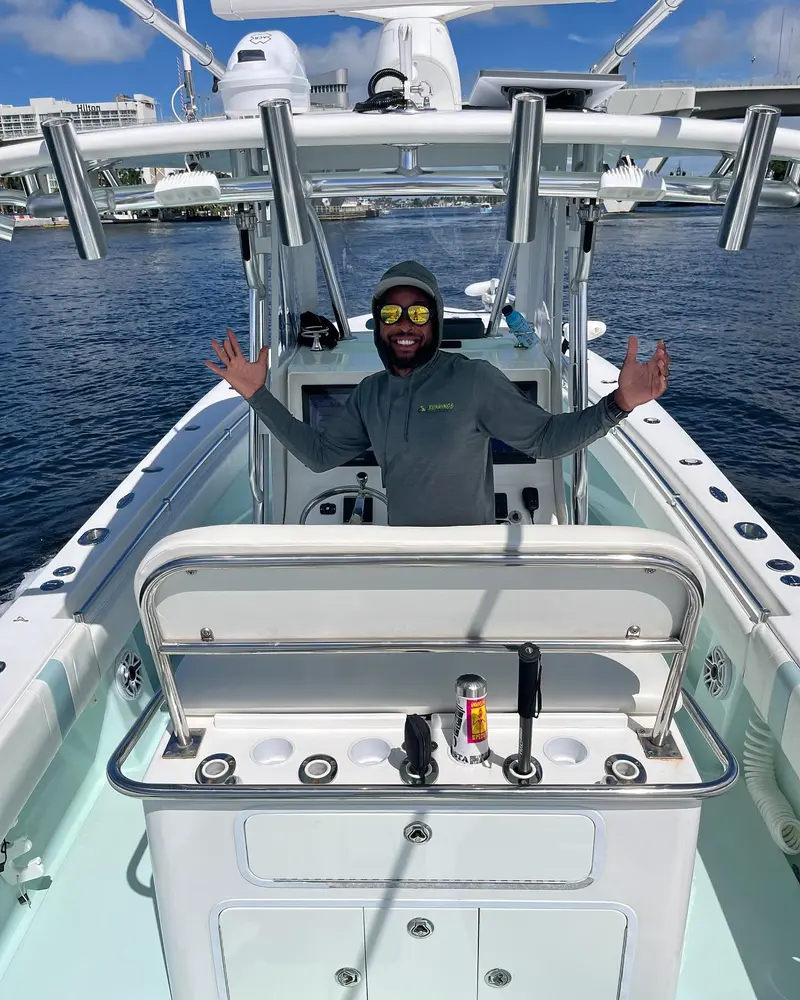
I run this setup off Cool Runnings, my 32-foot Contender out of Cox Landing. We use it all winter for offshore trips targeting sails.
WHY KITES BEAT TROLLING FOR SAILFISH
Trolled lures work for a lot of species. Sailfish are picky in cold water and often refuse dead baits pulled fast. A live bait sitting still on the surface is a different meal to them.
The kite also lets you cover water without pulling gear through it. Your baits are stationary while the boat drifts along a reef edge. That slow presentation matches how sails hunt in winter.
Bites are visual too. You watch the kite line, see a bait get nervous, then a bill pops up behind it. That moment is why people book kite trips year after year.
WHEN SAILFISH SEASON PEAKS HERE
Fort Lauderdale sits in one of the best sailfish zones on the Atlantic coast. Fish push south along the reef every winter as northern water cools. The season runs November through March.
The strongest bite usually falls between December and early February. That window lines up with the coldest fronts moving off the mainland. More fronts means more feeding fish stacked on our edge.
Miami sees the same run a bit later in the season. If you want context on the broader offshore calendar, this Miami timing breakdown covers month by month conditions.
Anglers coming up from Hollywood or down from Pompano Beach can reach Cox Landing in under 25 minutes for a peak-season kite day.
IDEAL CONDITIONS FOR A KITE BITE
The kite needs wind. My sweet spot is 10 to 15 knots out of the east or northeast. Under 8 knots and the kite will not stay up without extra help. Over 20 knots and the seas get sloppy for standing anglers.
Blue water pushed up onto the reef is a big signal. When the Gulf Stream edge sits close to shore in 120 to 180 feet, sails feed on the color change. Cold-front push days after a north wind are prime.
Sunny skies help. Sailfish light up in electric blue when they are hunting, and clear light lets you see them tail on the surface before the eat. Overcast days still produce, just with less show.
THE GEAR I RUN ON COOL RUNNINGS
My kites are SFE and AFTCO models rated for different wind ranges. I carry a light-wind kite and a heavy-wind kite so we can fish 6 to 25 knots. A small helium tank stays onboard for slow mornings.
The kite line runs on its own reel with three release clips spaced out. Below each clip, a dedicated kite rod holds a live bait on a circle hook. Drags stay light so a fish can eat and turn without feeling weight.
For the actual fight, we switch to 20-pound standup rods rigged with fluorocarbon leader. That gear is heavy enough to move a sailfish quickly and get it boatside for a healthy release. Fights over 45 minutes stress the fish too much.
Bottom rods stay rigged in the rocket launcher in case we want to drop for snapper or grouper during a slow window.
LIVE BAIT IS EVERYTHING
Goggle eyes are the gold standard. Sailfish eat other baits, but goggs are what fills the box on tournament days. They are tough, they swim hard on the surface, and they last long in the well.
We catch them at first light on sabikis before running offshore. That is why kite trips leave the dock at 6:30 am sharp. Miss the goggle eye bite and the whole day gets harder.
Threadfin herring and pilchards ride along as backup. They work fine, especially on calmer days when a smaller profile bait swims more naturally. A clean livewell with strong flow keeps everything alive for the full trip.
HOW A KITE DAY ACTUALLY UNFOLDS
Meet at Cox Landing at 6:15 AM. We are running out the inlet by 6:30 chasing dawn light for bait. Sabikis go down over structure and we fill the well with 40 to 60 goggle eyes.
From there it is a short run to the reef edge in 120 to 180 feet of water. I read the current, temperature break, and any bird activity, then set the drift. The kite goes up first, then the baits get clipped in order.
Now you watch and wait. Teasers splash behind the boat while the baits dance on the surface. A sailfish shows up as a blue shape sliding in from below, and the tail slap comes first. Then the bill smacks the bait, then the eat.
On the strike, you point the rod at the fish and let it swim. The circle hook does its job. Sails jump, tail-walk, and burn 200 yards of line. An average fight runs 20 to 40 minutes standing up before we get the leader.
Every sailfish gets released. This is a story fishery, not a meat fishery, and we handle every fish for the next angler. If you want a fuller sense of the day, this trip walkthrough covers what to expect start to finish.
WHAT ELSE BITES ON A KITE DAY
Sailfish are the target, but the same spread catches other species. Kingfish crush surface baits and often show up first on a warm morning. Blackfin tuna will come up on a bait too, especially near a color change.
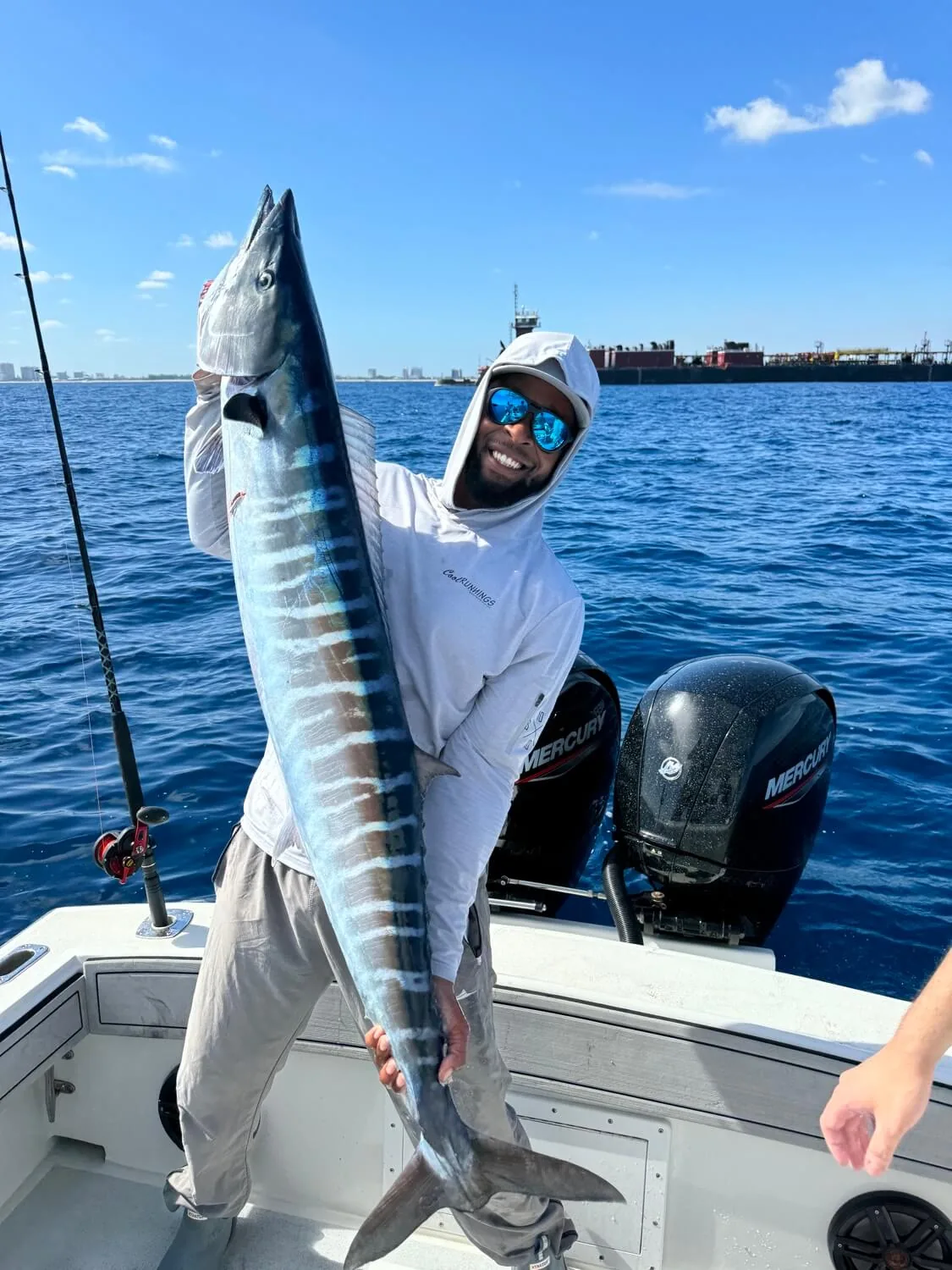
Dolphin ride weed lines nearby and will eat a kite bait if they cross the spread. Sharks show up on the fight and sometimes on the bait. Every one of those is a bonus fish on a sailfish trip.
Anglers wondering whether Fort Lauderdale offshore is worth the day can read this honest breakdown before booking. The short answer in winter is yes.
BOOK A KITE TRIP ON COOL RUNNINGS
Kite fishing is a full-day trip. Half days do not give us enough time to catch bait, run offshore, and work the drift properly. Eight hours is the minimum for a real shot at multiple sails.
Book around cold-front pushes when you can. Watch the marine forecast for a north wind swinging to northeast at 12 to 15 knots. Those are the days we live for out of Fort Lauderdale.
Call or text me at (954) 806-0005 to talk dates and check the wind window, or lock in a day through the Cool Runnings booking calendar. Peak weeks in January fill fast, so early is better.