THE RIDE OUT
Deep sea fishing in Fort Lauderdale starts before the sun is up. You meet at the dock around 6:30 in the morning, the boat is already loaded with bait and ice, and you're idling out of the inlet by 7. The skyline glows behind you. The water turns from murky green to cobalt blue within a few miles of the beach.
That color change is the edge of the Gulf Stream. It's where the deep sea fishing actually starts. The water temperature jumps a few degrees, the bait stacks up along the temperature break, and the predators sit underneath. Our offshore fishing trips usually start fishing within 20 minutes of leaving the dock.
THE STRIKE
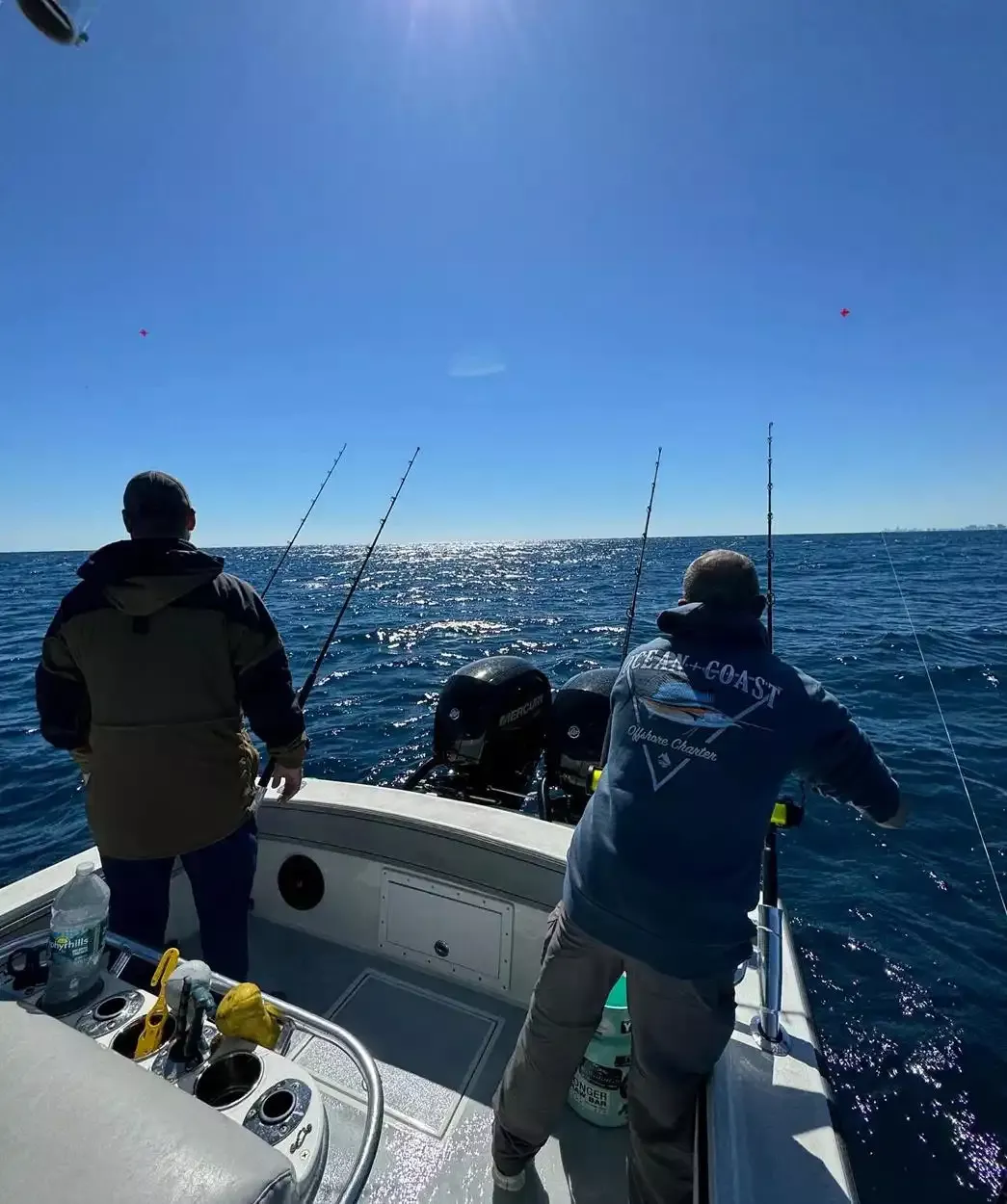
The first hour is setting up the spread. Trolling skirted lures and rigged ballyhoo behind the boat at 7-8 knots. The kites go up if conditions are right, suspending live goggle-eyes or sardines on the surface.
Then you wait. You watch the rod tips and listen to the captain on the radio.
When something hits, the reel screams and the day changes. A sailfish jumps three times in the first ten seconds. A mahi explodes on a chugger and runs 100 yards before you can grab the rod.
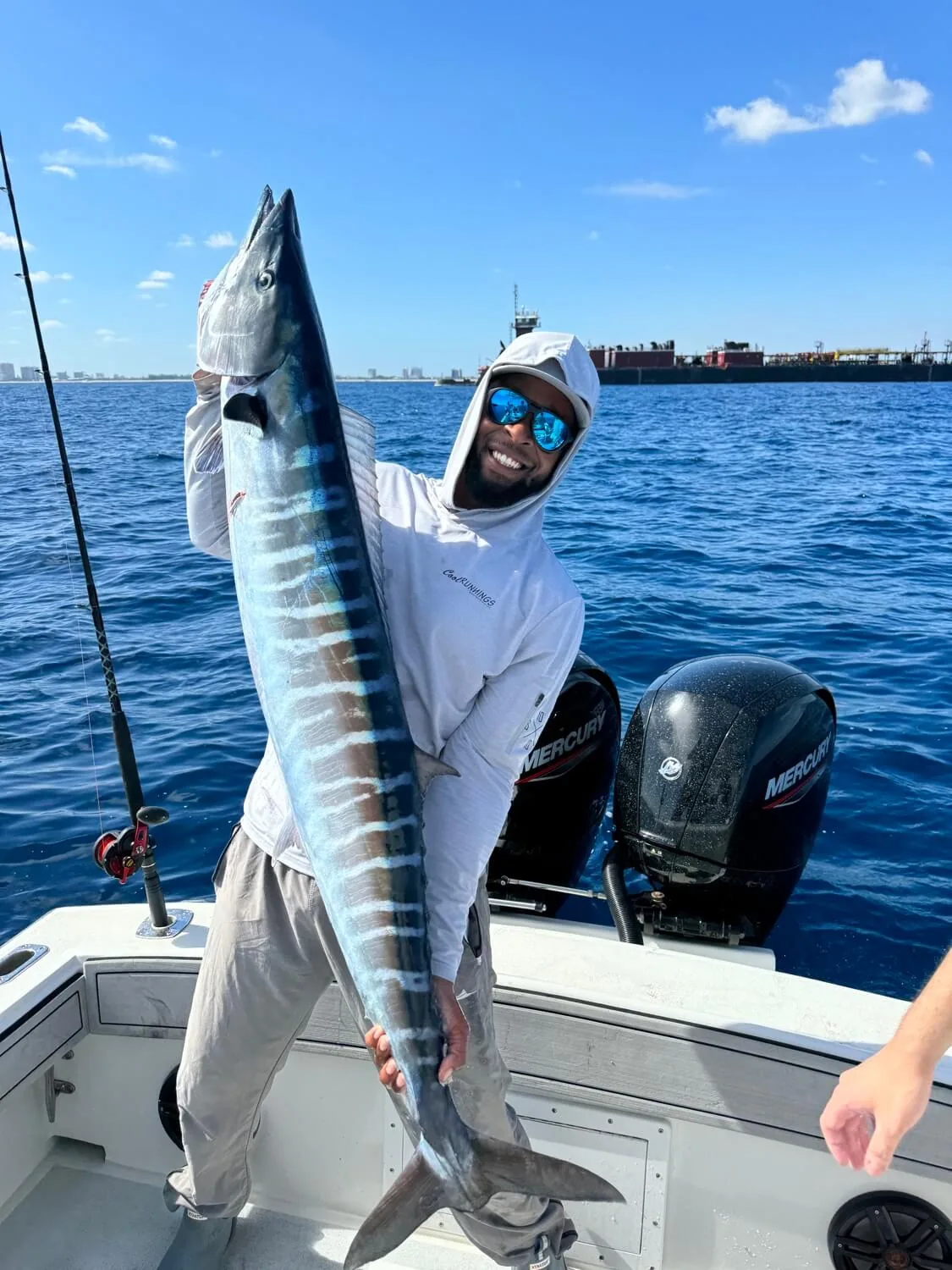
A wahoo strips line so fast the drag smokes. Adrenaline is the whole point. More on what's biting throughout the year is in our Miami offshore seasonal guide.
THE CREW
The captain runs the boat, watches the electronics, picks the spots, and manages the spread. The mate (if the trip has one) handles the bait, rigs the rods, and helps with the fight. Both have spent thousands of hours on this stretch of water. They read it like a book.
Captain Jason Robinson grew up fishing South Florida. He's been featured on Bass2Billfish with Peter Miller, run tournaments, and has spent over a decade running charters out of Fort Lauderdale. The about Cool Runnings section has his full background and the boat specs.
WHAT TO BRING
Sun protection comes first. Reef-safe sunscreen, hat, polarized sunglasses, long-sleeve fishing shirt. Closed-toe shoes with non-slip soles, never flip-flops. Water, snacks, and any motion sickness medication taken an hour before departure.
The boat provides every rod, reel, lure, bait, license, and the safety equipment. The dock cleans and bags your catch at the end of the trip. Read everything to bring on a Fort Lauderdale or Miami charter for the full breakdown.
WHAT THE WATER TEACHES
An hour into a deep sea trip, you stop checking your phone. The horizon does something to people. The water is moving in three directions at once.
Frigates and shearwaters work bait pods you can see from a quarter mile away. A sailfish lights up purple in the spread and tracks the bait before the strike. It is not subtle. It is the most alive a piece of ocean gets.
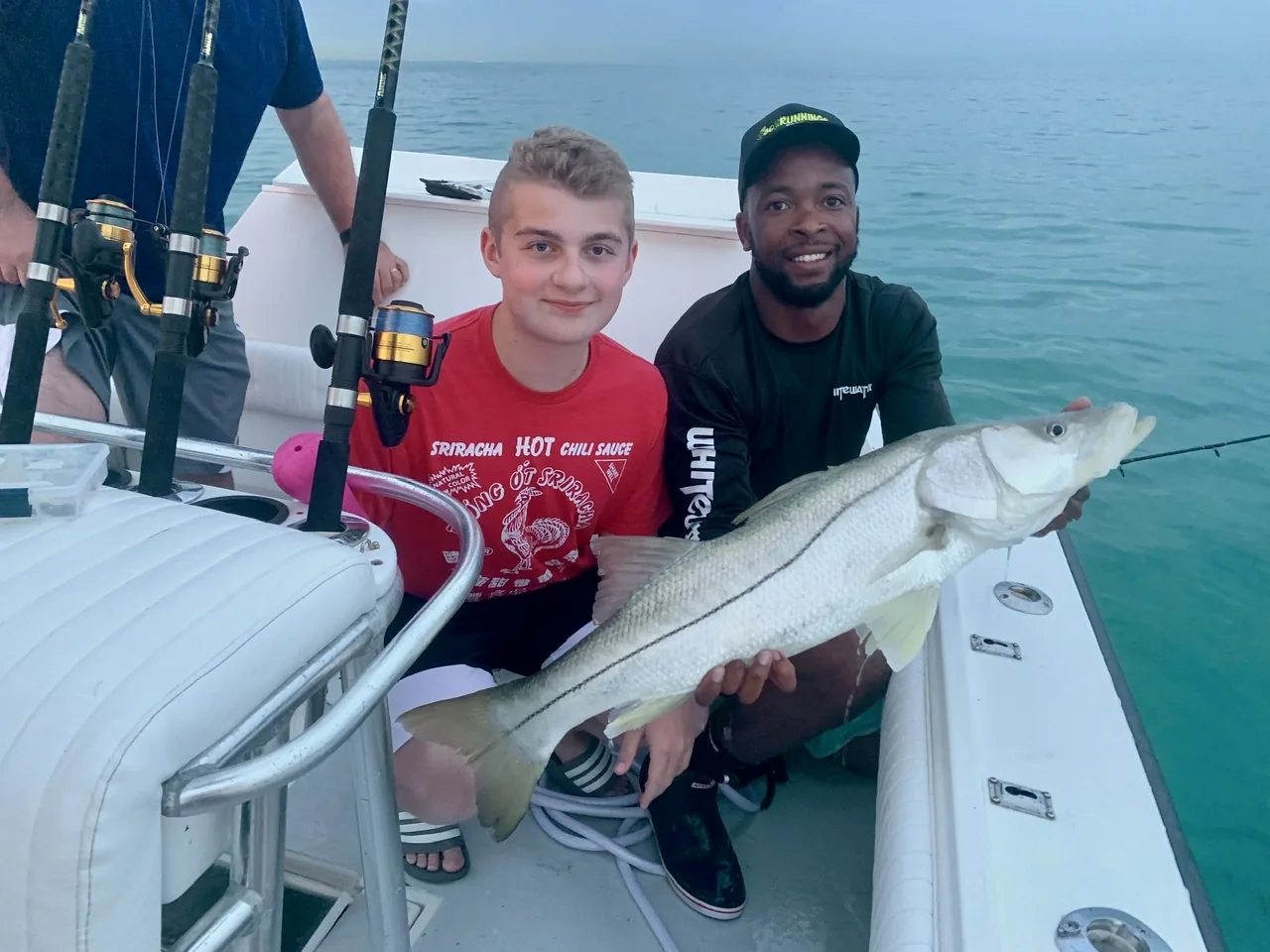
That's why people drive across the country and fly across the world for this. The Cool Runnings boat fishes the same Gulf Stream edge that's been producing for 50 years. Photos from recent trips are in our fishing photo gallery.
WHY PEOPLE COME BACK
The first trip is the hook. People come back because the next trip is different. Different season, different species, different conditions.
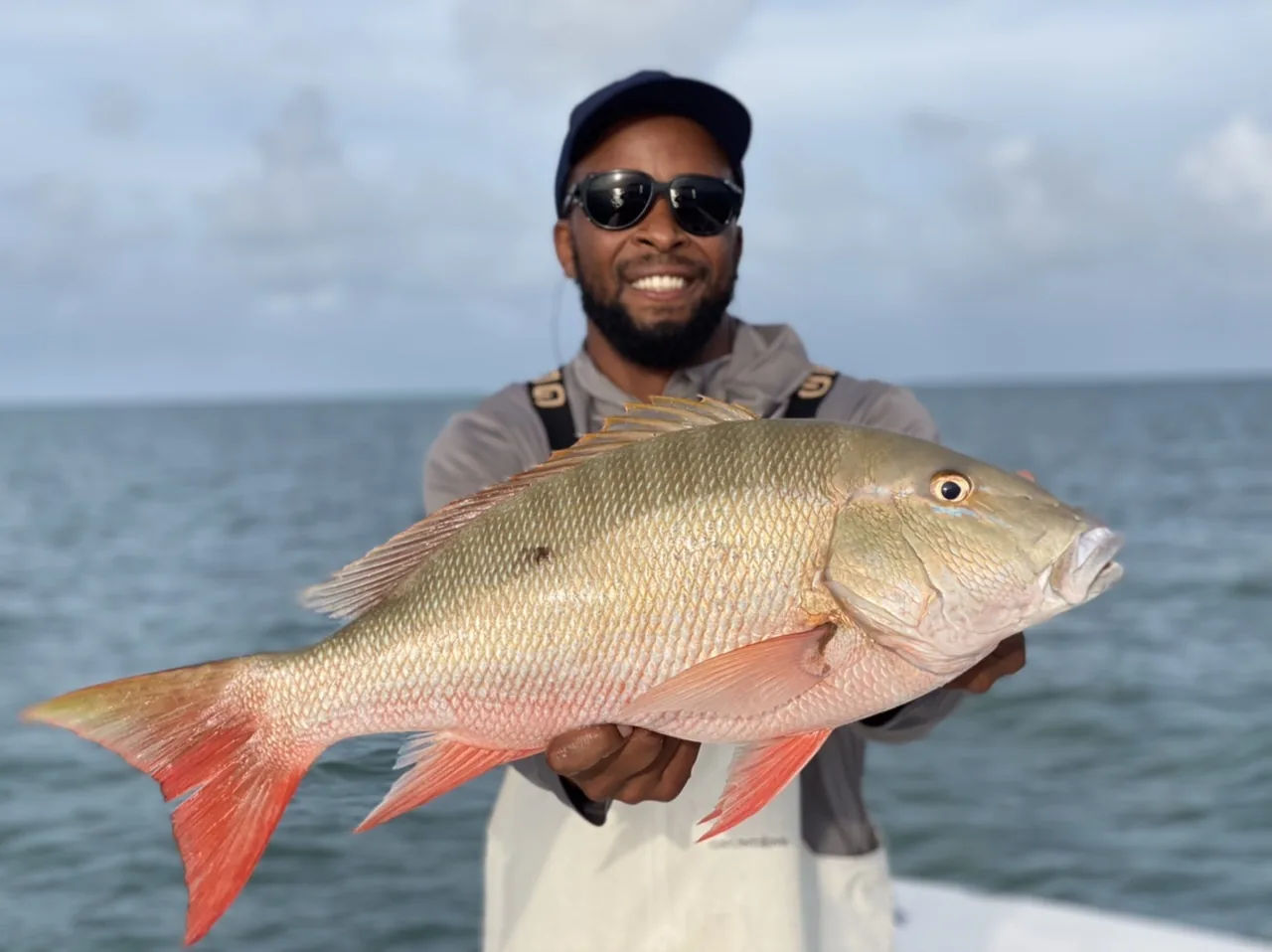
A mahi day in June feels nothing like a sailfish day in January. A drift over deep wrecks for snapper feels nothing like trolling for kingfish on the edge.
About a third of our trips are repeat guests, and we offer a discount on every 3rd trip you book. Booking and trip-length options are on the charter contact and booking form.
FREQUENTLY ASKED QUESTIONS
What's the difference between deep sea and offshore fishing?
They're often used interchangeably in Florida. Both refer to fishing beyond the reef line in water over 100 feet deep. Our offshore fishing charters target the same species (sailfish, mahi, tuna, wahoo) that get called "deep sea" species.
How long is a typical deep sea fishing trip?
Half-day is 4 hours (about 3 hours of actual fishing after the run). Three-quarter day is 6 hours. Full day is 8 hours. Most deep sea anglers do the 6 or 8 hour option to maximize time on the edge. Trip lengths and details are on our charter information overview.
Will I get seasick?
Maybe. The Gulf Stream usually runs 2-3 foot seas, which most people handle fine. If you're prone to motion sickness, take Bonine or non-drowsy Dramamine an hour before departure. The 32 Contender rides smooth. Boat and trip details are on the about Cool Runnings section.