WHY THE SNAPPER BITE TURNS ON AFTER DARK
Snapper are cagey fish in bright water. Daytime pressure on the second and third reefs off Fort Lauderdale pushes the bigger fish deep into the ledges and wrecks. They hide, watch leaders, and refuse baits that looked easy at 5 AM.
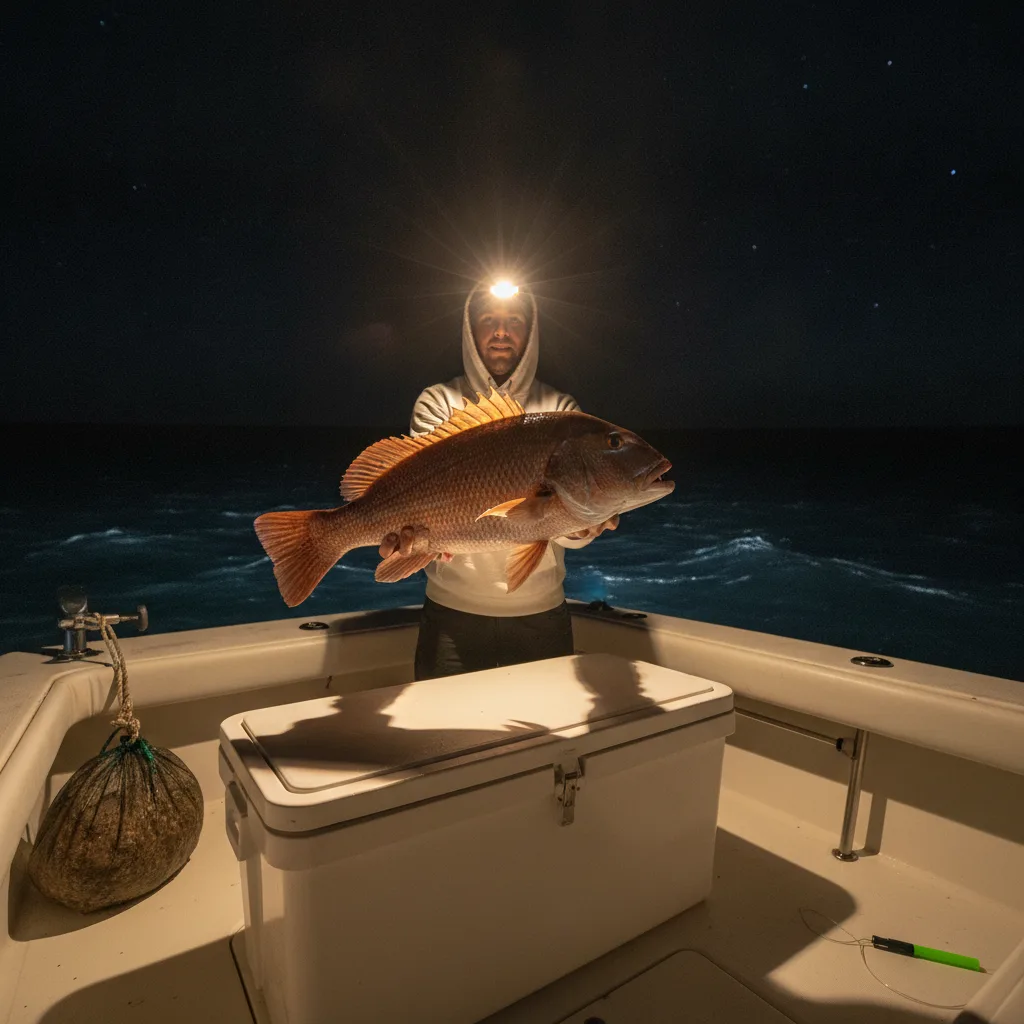
Once the sun drops, the whole reef changes. Boat traffic thins, the water cools by a few degrees, and mutton snapper slide up out of the deeper hides to feed shallower. They lose most of that line-shy behavior, which is why we pull rigs after sunset most of the year on Fort Lauderdale reef and wreck bottom fishing trips.
The bait pods stack heavier at night too. Pilchards and threadfins ball up in the chum slick, and the snapper move in on them without much hesitation. That is the window I chase.
WHAT WE TARGET ON A NIGHT TRIP
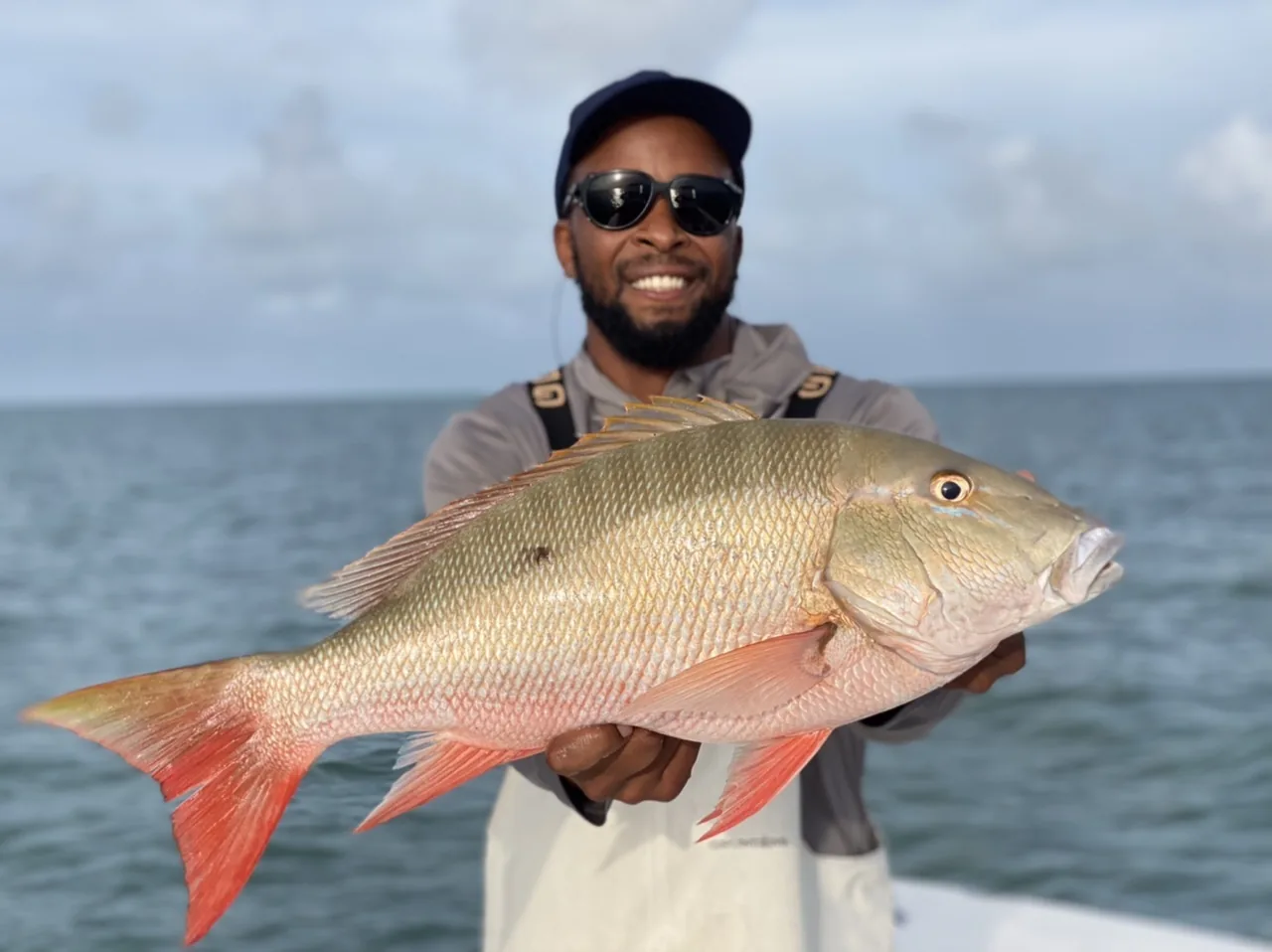
Mutton snapper are the trophy fish. On a good tide we land muttons in the 10 to 20 pound class, sometimes bigger off the deep wrecks. They fight hard, dive straight for the structure, and taste as good as any fish in South Florida.
Yellowtail keep the rods bent between the bigger bites. These are steady 2 to 4 pound fish that come up in the chum and hit small chunks. On a hot night a crew of four can put 20 or 30 yellowtail in the box.
Mangrove snapper fill in on the wrecks and rockpiles, and every so often a cubera or a big black snapper crushes a live bait and reminds everyone why we use fresh leader. If any of that sounds interesting, take a look at the photos and reports from recent Cool Runnings clients.
WHERE WE FISH OFF FORT LAUDERDALE
Most nights we work water between 60 and 120 feet. That covers the outer edge of the second reef, the third reef, and a string of wrecks scattered between Port Everglades and Hillsboro Inlet. The wrecks off Pompano Beach and the artificial reef zone up north hold the biggest muttons I see all season.
Closer to Dania Beach and the reefs south of the inlet, the yellowtail bite is more consistent, and the mangroves stack thick on the ledges. It is a shorter run home, which crews with kids appreciate.
On calm nights I will bounce two or three spots. Anchor, chum, work it hard for 45 minutes, and move if the bite is not there. The reef holds fish everywhere, but not every ledge fires on the same tide.
TIDES, MOON, AND THE SLACK WINDOW
Timing is everything on a snapper trip. My favorite window is the tail end of a moving tide into slack water. Fish feed hard when the current eases up, especially the big muttons that hate fighting a ripping current.
The moon matters too. A dark night around the new moon fires hardest because the snapper cannot see leaders and hooks nearly as well. Full moon trips still produce, but the bite spreads out and the fish get pickier. Same pattern I mentioned in the Cool Runnings fall fishing tactics breakdown.
Most of our trips leave the dock at sunset and fish 4 to 6 hours, tying up around 11 PM or midnight. That covers a full tide change and gives the crew enough time to work through both windows.
THE CHUM, THE TACKLE, AND THE BAIT THAT WORKS
A heavy chum bag is non-negotiable. I hang two frozen blocks off the transom, weight them down in the current, and let the slick pull fish up off the bottom. Once the yellowtail show in the wash, I know the snapper are close.
For gear we run 20 to 30 pound spinning tackle with 30 to 50 pound fluorocarbon leader. Small circle hooks in the 3/0 to 5/0 range work best, and I add a chartreuse glow bead or a small glow stick above the hook when the water is truly dark. It gets bit.
Bait is fresh or nothing. Live pilchards and small threadfin herring for the muttons, fresh cut sardine or ballyhoo chunks in the slick, and live shrimp for the yellowtail when they get finicky. Some of the same live bait tactics carry over from the South Florida mullet run snook and tarpon coverage, just scaled up for reef work.
WHAT A NIGHT TRIP ACTUALLY FEELS LIKE
Night charters run quieter than daytime trips. The radio chatter drops off, the deck lights stay low so the fish do not spook, and the only real noise is the chum slick working and the occasional drag scream. Crews often say it is the calmest fishing they have done in years.
I keep a spotlight ready for landing fish. When a big mutton comes up out of 90 feet, we light it, gaff it clean, and get it straight into the ice box. There is always fresh cold water in the box waiting for fillets, so the meat stays perfect all the way to the dock.
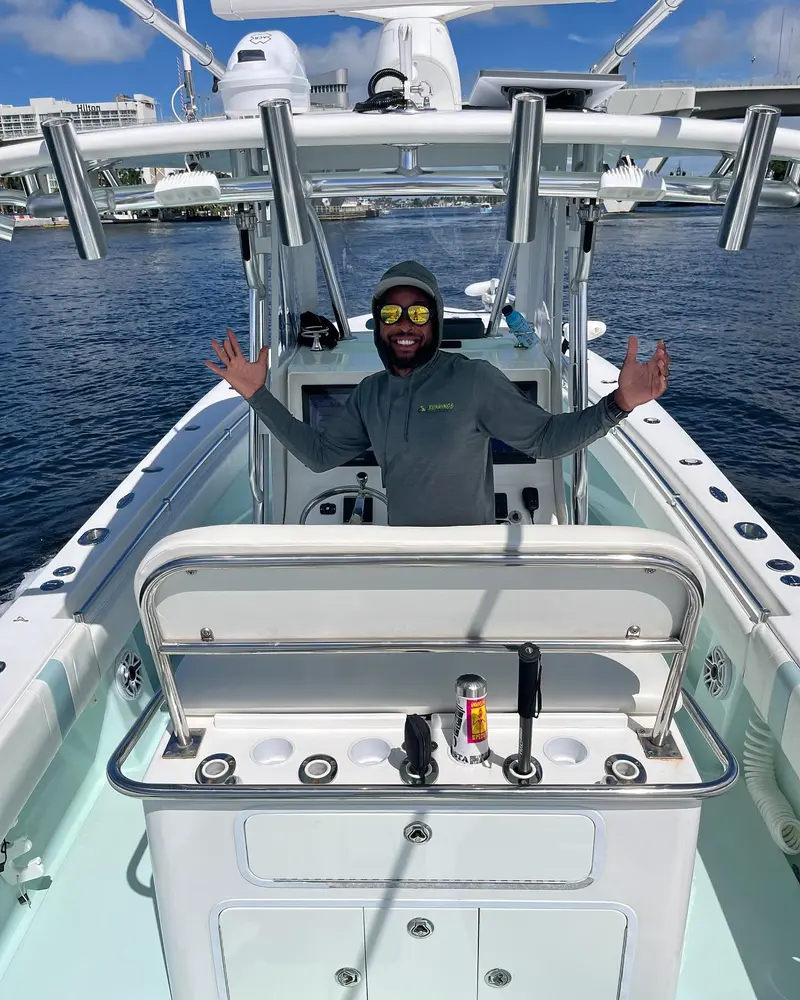
When we tie up at Cox Landing I clean the catch right there. If you want to see what the boat and dock setup looks like before you book, the Cool Runnings gallery of recent charters covers it. New crews can also read up on what a deep sea fishing trip in Fort Lauderdale is like for the general flow.
SEASON, REGS, AND BOOKING A TRIP
Snapper fire year-round off Fort Lauderdale, but summer and early fall are the sweet spot. Warm nights, calm seas, and long tide windows stack in your favor. Winter still produces, especially around the new moon, but the crew needs a windbreaker and a warm layer once the sea breeze picks up.
On the regs side, muttons are 16-inch minimum, mangroves are 12, and yellowtail carry a 10-fish per person bag. I run through the full briefing on the boat before any lines go in, so nobody has to memorize the FWC book beforehand.
Ready to lock in a night snapper trip? Call the boat direct at (954) 806-0005 or grab a date on the Cool Runnings booking calendar. Rates and what is included live on the full charter rates and inclusions breakdown.