WHAT THE MULLET RUN ACTUALLY IS
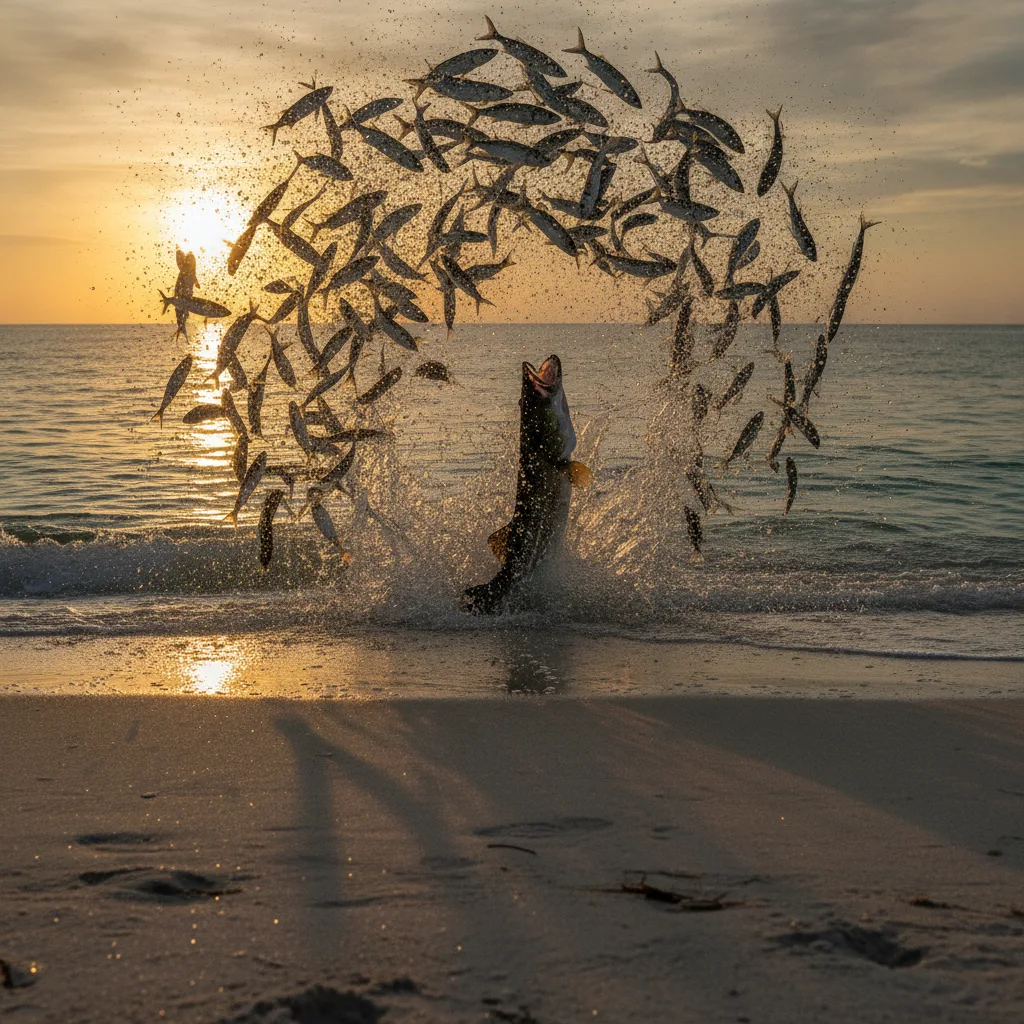
Every fall, finger mullet stack up in the northern lagoons and start pouring south along the Atlantic beach. The migration usually builds through mid-September and stays strong into early November. On a good day the bait forms dark ribbons ten feet off the sand, moving with the swell.
These are not the big black mullet you cast net for chum. Finger mullet run three to six inches, silver, perfect snook and tarpon food. When the schools pack tight, they push the whole food chain shallow.
The run is a moving target. Wind, water temperature, and pressure decide which day the beach lights up and which day the bait slides three miles offshore. That variability is why we watch it every morning before we commit.
WHO SHOWS UP TO EAT
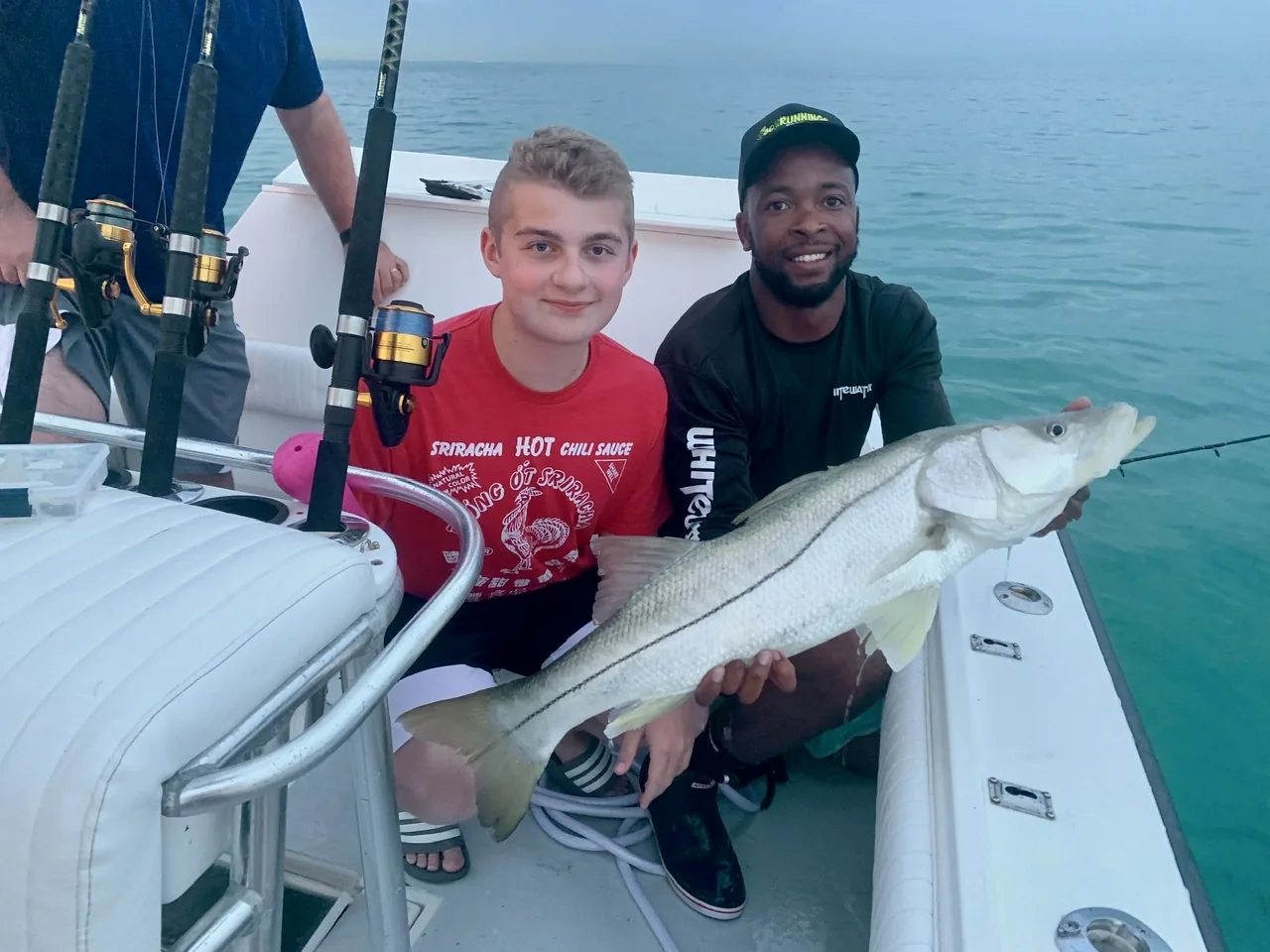
Snook are the headliner. They stack in the trough behind the first bar and blow up on bait so hard you hear it from the boat. Twenty to thirty pound fish are common, and a real trophy is on the table.
Tarpon follow the same corridor. Some are resident 40-pound juveniles from the inlets, some are 100-plus adults still lingering from the summer push. A silver king rolling through a bait ball at sunrise is worth the trip by itself.
Jack crevalle wolf packs run the beach and inlet mouths, tearing schools apart. Add spinner sharks, blacktips, bluefish, big Spanish mackerel, and kingfish sliding in close, and every cast can produce a different fish.
WHERE WE FISH IT OUT OF FORT LAUDERDALE
The Fort Lauderdale beachfront is prime real estate during the run. We work from just north of Port Everglades up past Sunrise, staying inside a quarter mile of the sand. Bait is easy to spot: nervous water, dark patches, birds.
South of the port, Hollywood and Dania Beach hold the same fish. The beach curves, the trough deepens in spots, and snook set up on structure you cannot see from land. North, Pompano Beach and Hillsboro Inlet funnel migrating bait through a hard current break that stacks predators.
The inlets themselves matter. Port Everglades and Hillsboro both dump mullet in and out with the tide, and the corners on either side of the jetty hold snook all day.
TIMING THE BITE
First light is the window. Glass-calm ocean, low sun, bait still holding tight against the beach. That first hour before boat traffic wakes up produces most of the trophy snook we catch during the run.
Evening on a falling tide is the second window. The sun drops behind the buildings, shade lays out across the water, and predators feed again before dark. If we run a full day we plan around those two edges.
Ocean condition beats time of day. A slick two-foot day beats a bumpy four-foot day at any hour. When it howls east for a week, the mullet push offshore and out of range, and we reset the plan. Check what is biting right now before you book if you want a real-time read.
HOW WE FISH THE BAIT BALLS
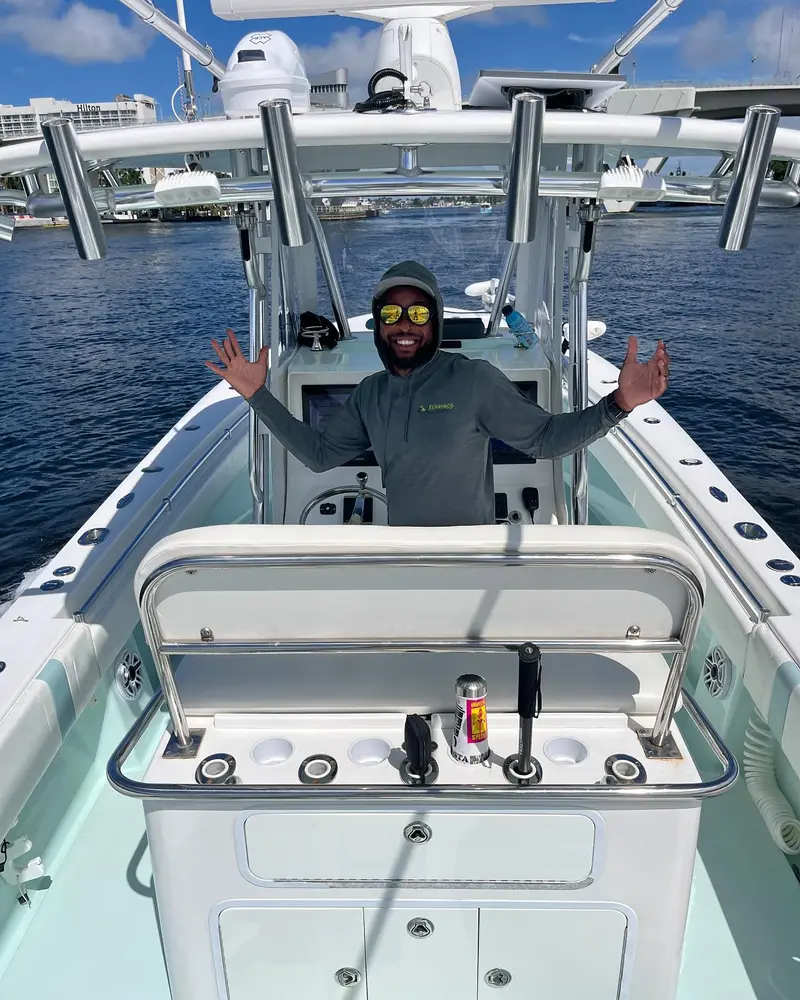
The 32-foot Contender lets us cover water quickly and idle up on schools without spooking them. We rig live finger mullet through the nose on a 4/0 circle hook, no weight, and drift them next to the bait. A hooked mullet swimming scared is what gets eaten first.
When fish are blitzing on top, we throw artificials. A weightless six-inch soft plastic swimbait matches the hatch better than anything. Big paddletails on a 1/4-ounce jighead work when fish are holding deeper in the trough.
Topwater plugs draw the most violent strikes of the year. A walking bait worked through the edge of a bait ball at dawn produces snook eats that will ruin you for other fishing. See more fall patterns in our fall fishing tactics breakdown.
TACKLE THAT HOLDS UP
Twenty-pound spinning is the workhorse. A 7-foot medium-heavy rod, 4000-size reel, and 20-pound braid handles snook, jacks, and juvenile tarpon without wearing you out. Bring 30 to 40-pound fluorocarbon leader for snook, since they hunt around dock pilings and jetty rock.
For bigger tarpon, we step up to 40 to 50-pound leader and a 5000-size reel. Adult silver kings will run a hundred yards on the first jump, and thin leader against a sandpaper mouth ends badly.
We provide all the tackle, bait, and license on the boat. If it is your first inshore trip, our first-timers guide walks through what to expect. Full details on the boat and what is included are on the full charter rates and inclusions.
BOOKING THE RUN
Half-day inshore trips are the right call during peak run. Four hours covers both morning windows and lets us stay flexible if the bait moves. Full days work if you also want to try offshore edges for kingfish tearing into the same mullet.
Mornings book out first. If mid-September through early November is on your calendar and you want first light on a weekend, reserve early. Weekday mornings stay open longer and often fish better because the beach is quiet.
Call the boat at (954) 806-0005 or lock a date on the Cool Runnings booking calendar. The mullet run is the best inshore window of the year, and it does not wait.