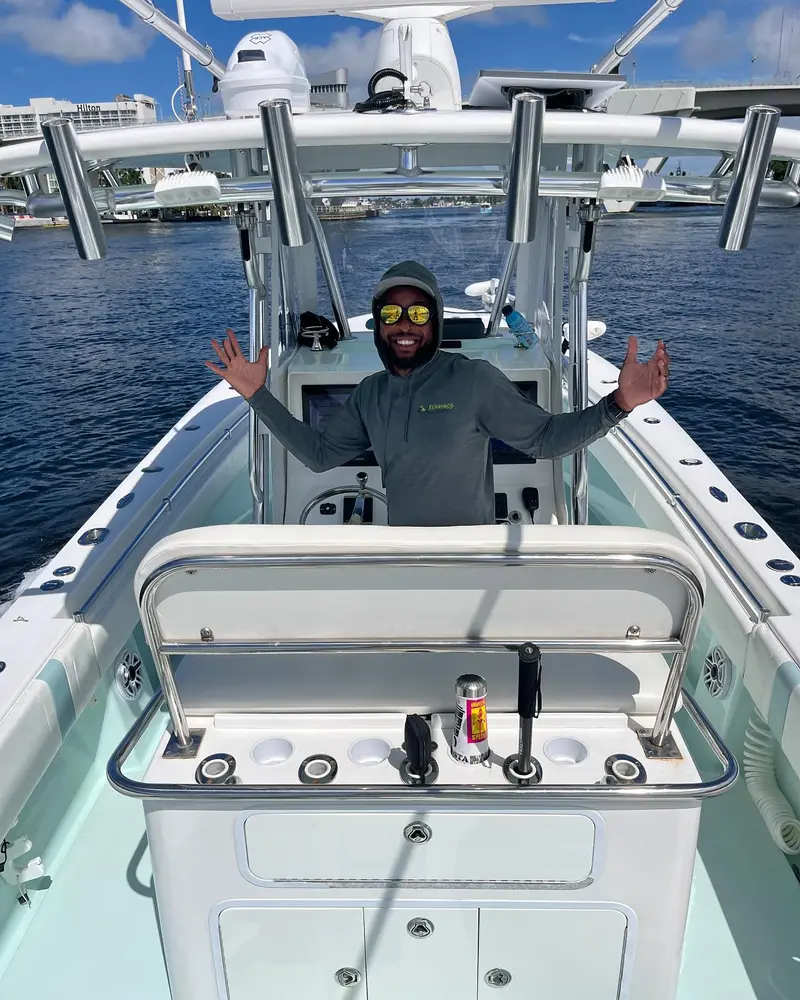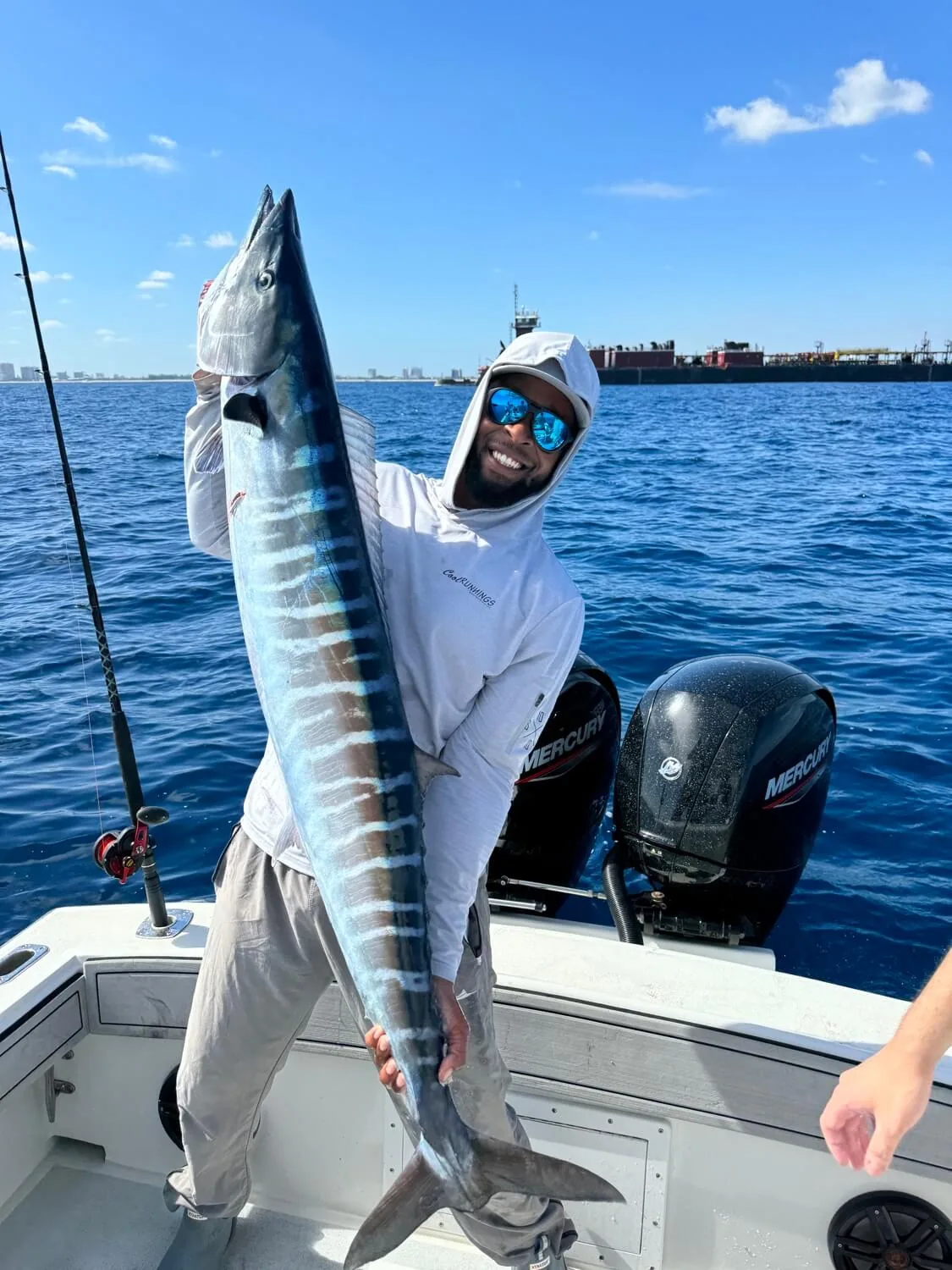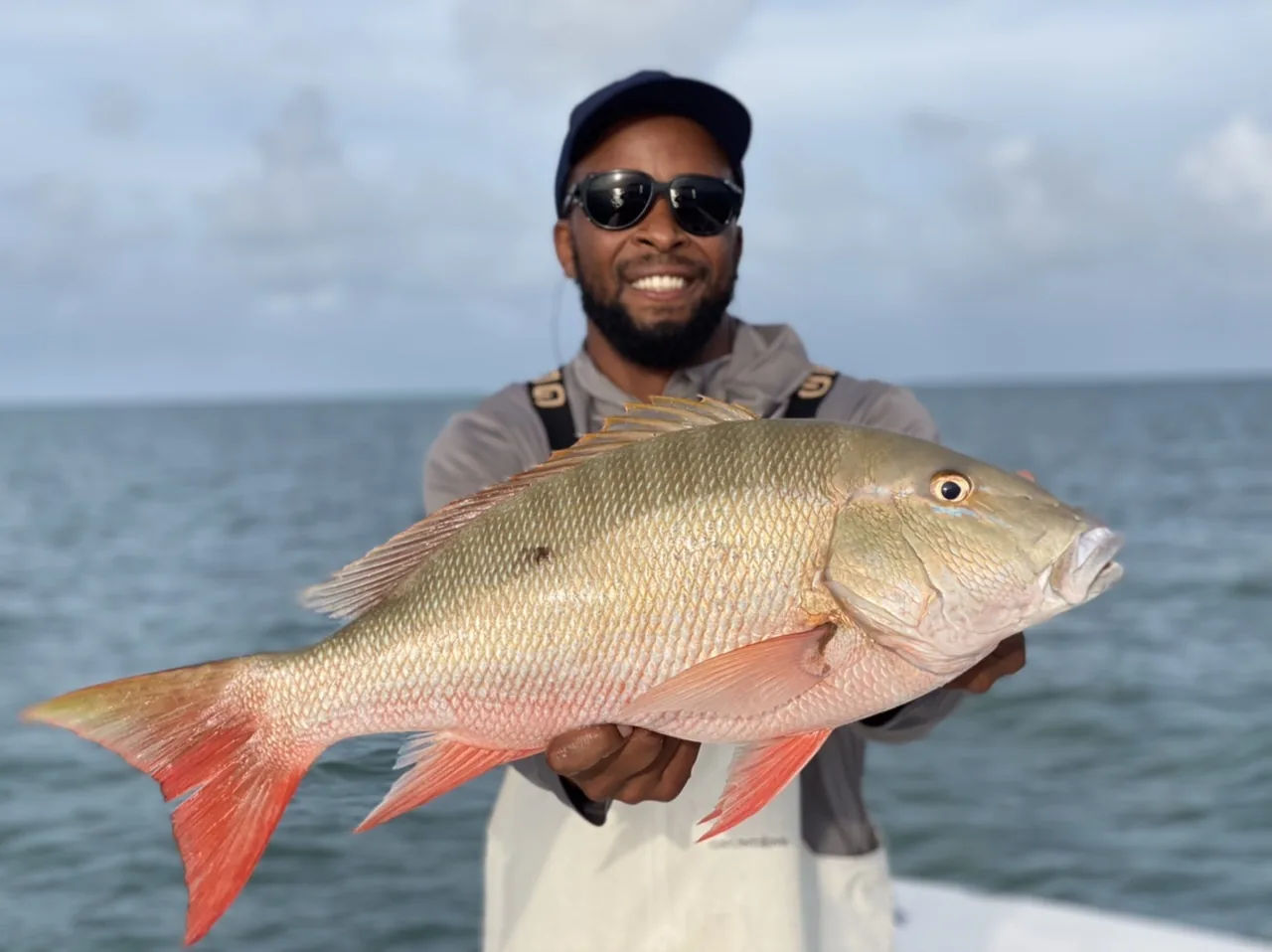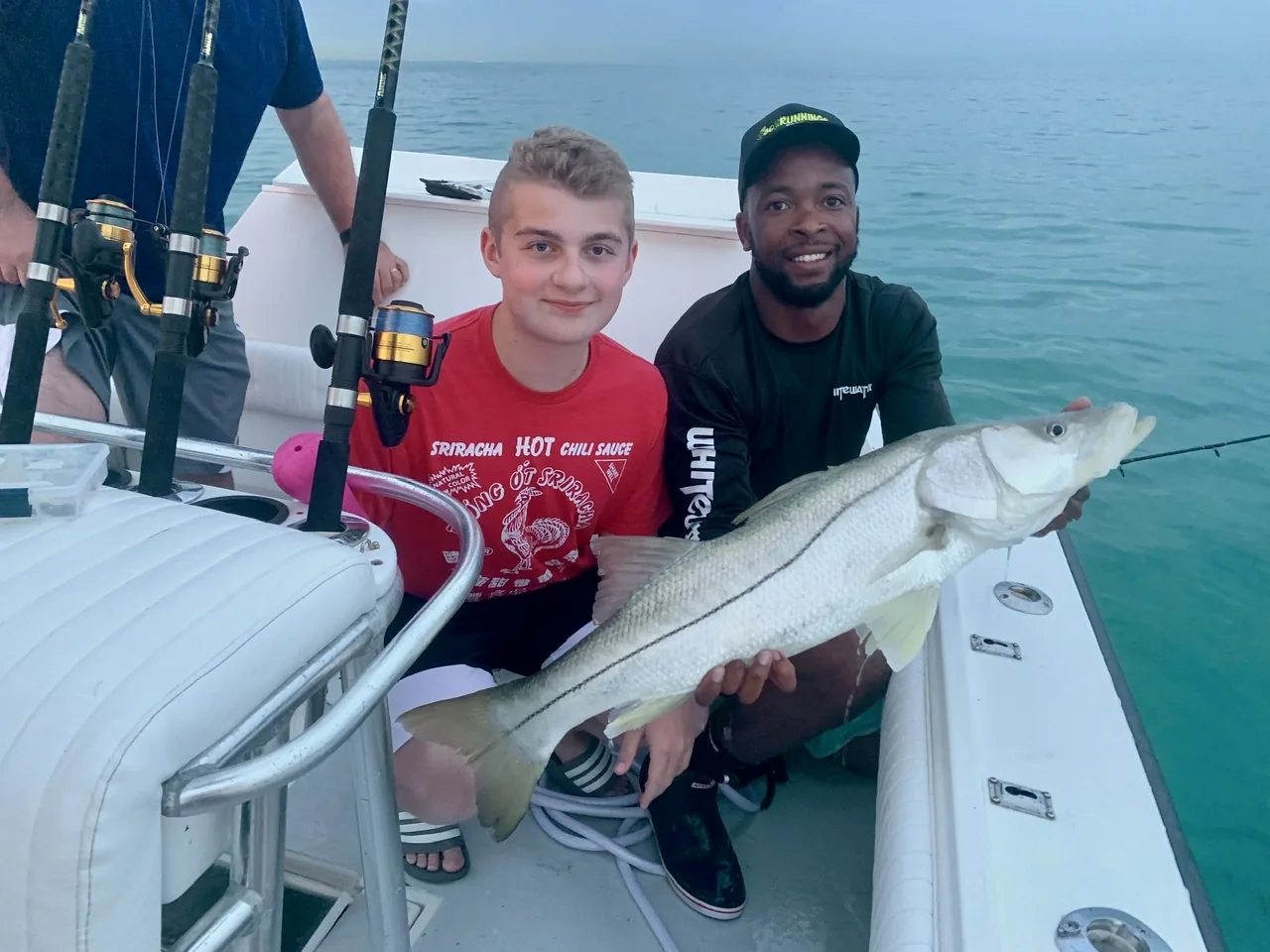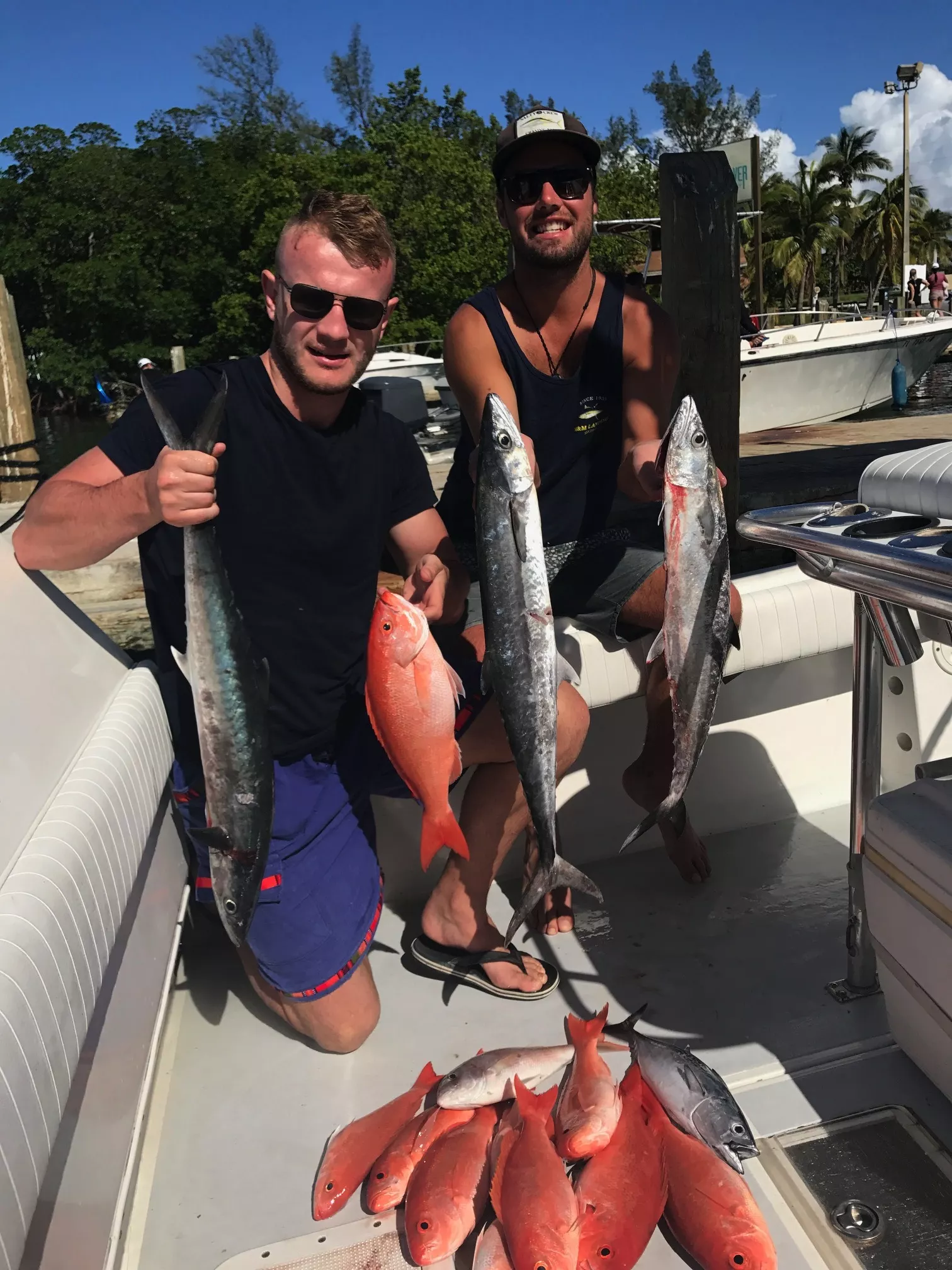
OFFSHORE: TUNA, SKIPJACKS & LATE-SEASON MAHI
Fall offshore fishing in Fort Lauderdale is all about variety. Blackfin tunas push into the area in big numbers from September through November, and a good day on the edge can produce a dozen or more. The bigger fish run 15-25 pounds and hit live bait, jigs, and small trolling lures.
Skipjack tuna show up in schools and can be caught all day once you find them. Look for birds working bait pods on the surface. Late-season mahi are still around through October, especially under weedlines and floating debris.
Most of our fall offshore work happens in 200-2,000 feet of water. Our offshore fishing charters shift to fall targets September through November.
DEEP DROPPING: TILEFISH, SNOWY GROUPER & MORE
Deep dropping is the secret weapon for fall fishing. We run out to 500 feet plus and drop electric reels with cut bait on weighted rigs to the bottom. The targets are species you can't catch any other way: vermilion snapper, snowy grouper, golden tilefish, barrelfish, and black-belly rosefish.
The technique is patient. Drop the rig, let it hit bottom, crank up a few turns to keep it off the rocks, and wait for the bite. The electric reels do the heavy lifting on the retrieve.
The catch is some of the best-eating fish in the Atlantic. The full deep-dropping species list is on the bottom fishing charter overview.
REEF FISHING FOR SNAPPER
Fall is also prime time for reef fishing. Mangrove snapper and yellowtail snapper hold tight to hard bottom in 50-100 feet of water and feed aggressively as the water cools. The trick is light fluorocarbon leader, small live baits or fresh chunks, and minimal lead.
Night fishing can be even better. The yellowtails come up in the chum slick and the muttons cruise the edges. A good night drift can produce coolers full of snapper.
We do both day and night reef trips depending on what you're after. More on the reef trips is on the bottom fishing overview.
THE MULLET RUN INSHORE
September through November is the mullet run, and it changes everything inshore. Massive schools of mullet push down the beaches and through the inlets, and every predator in the ocean follows them. Snook, tarpon, jack crevalle, mackerel, and sharks all gorge for two months straight.
The best spots are the inlets, the beach troughs, and the back bays. Biscayne Bay canals and creek mouths around Key Biscayne produce monster snook on live mullet. Our inshore fishing charters shift heavy into mullet run mode from mid-September through November.
PUTTING IT TOGETHER
Fall is the most diverse fishing season in South Florida. A single trip can target offshore tuna and mahi, then drop deep for snowy grouper, then run inshore for the mullet run. Few seasons let you stack that much variety into one day.
If you've never fished the fall bite, this is the season to come down. Book a few days so the captain can pick the best weather window. Booking and trip details are on the charter contact and booking form. Tight lines.
- Captain Jason
FREQUENTLY ASKED QUESTIONS
What's the best fall species to target?
Depends on what you want. Blackfin tuna for nonstop action on the edge. Snowy grouper and tilefish for table fare on the deep drop. Snapper for night reef fishing. Snook and tarpon for the mullet run inshore. Our offshore fishing and inshore fishing trips cover all of them.
Is deep dropping difficult?
Not at all. The electric reels do the work. You drop the rig, wait for the bite, and the reel cranks up the catch. It's actually one of the easiest techniques on the boat for older anglers or anyone who can't fight a fish for an hour. Our bottom fishing charter covers the gear details.
When does the mullet run start?
Usually mid-September through November, with peak action in October. Cold fronts pushing down from the north trigger the bigger runs. Book early. The mullet run weekends fill up fast. Reserve your fall mullet-run charter with Captain Jason.