WHY FORT LAUDERDALE IS THE BEST SWORDFISH PORT ON THE EAST COAST
Broadbill swordfish live in deep, blue water, and most of the coast makes you burn fuel to find them. Out of Port Everglades the Gulf Stream sits ridiculously close to shore. The 1,500-foot line is often just 8 to 15 miles from the inlet.
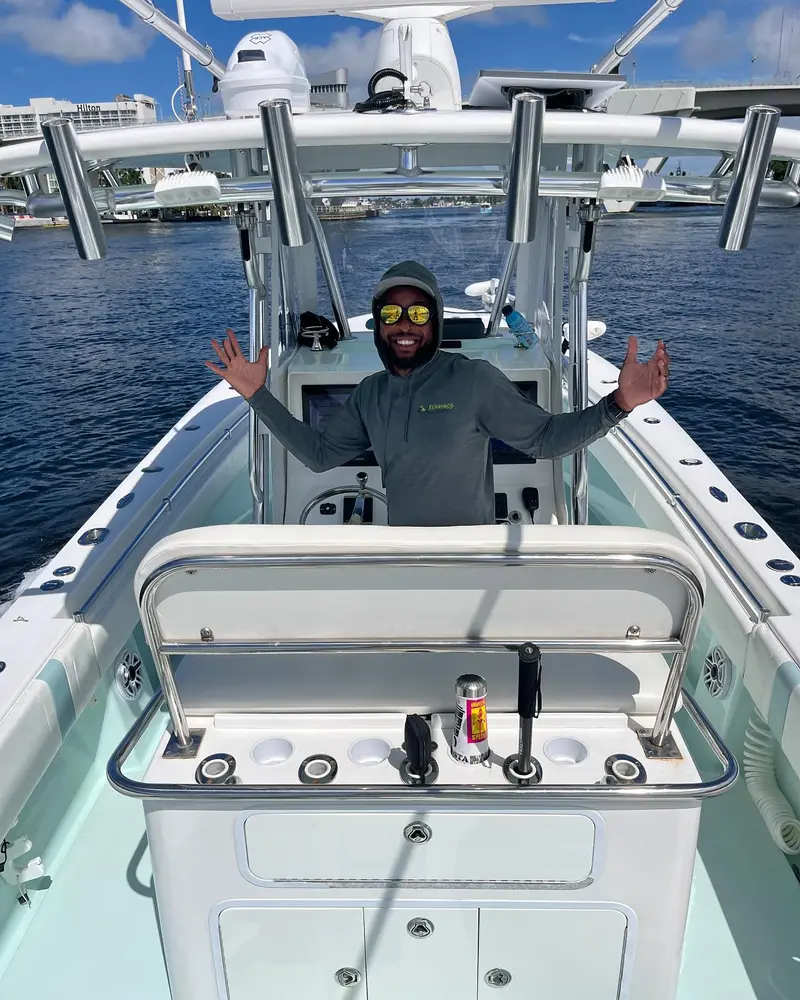
That short run is why Cool Runnings can fish daytime deep-drops or nighttime drifts without eating up half the charter on travel. I run a 32-foot Contender out of Cox Landing, and swordfish grounds are less than an hour away. If you want to see how the ride sets up, our full breakdown of a Fort Lauderdale offshore day walks through the whole flow.
Both techniques catch fish here year-round. The question is which one fits your group. Let me walk you through both.
DAYTIME DEEP-DROP SWORDFISHING, EXPLAINED
Daytime swords sit deep, usually between 1,500 and 2,000 feet, sometimes hugging the bottom and sometimes suspended off ledges. To reach them we run a heavy tackle deep-drop rig with an LP Elec-Tra-Mate electric reel. Braid main line, 200 yards of 100-pound mono top-shot, and a wind-on fluorocarbon leader.
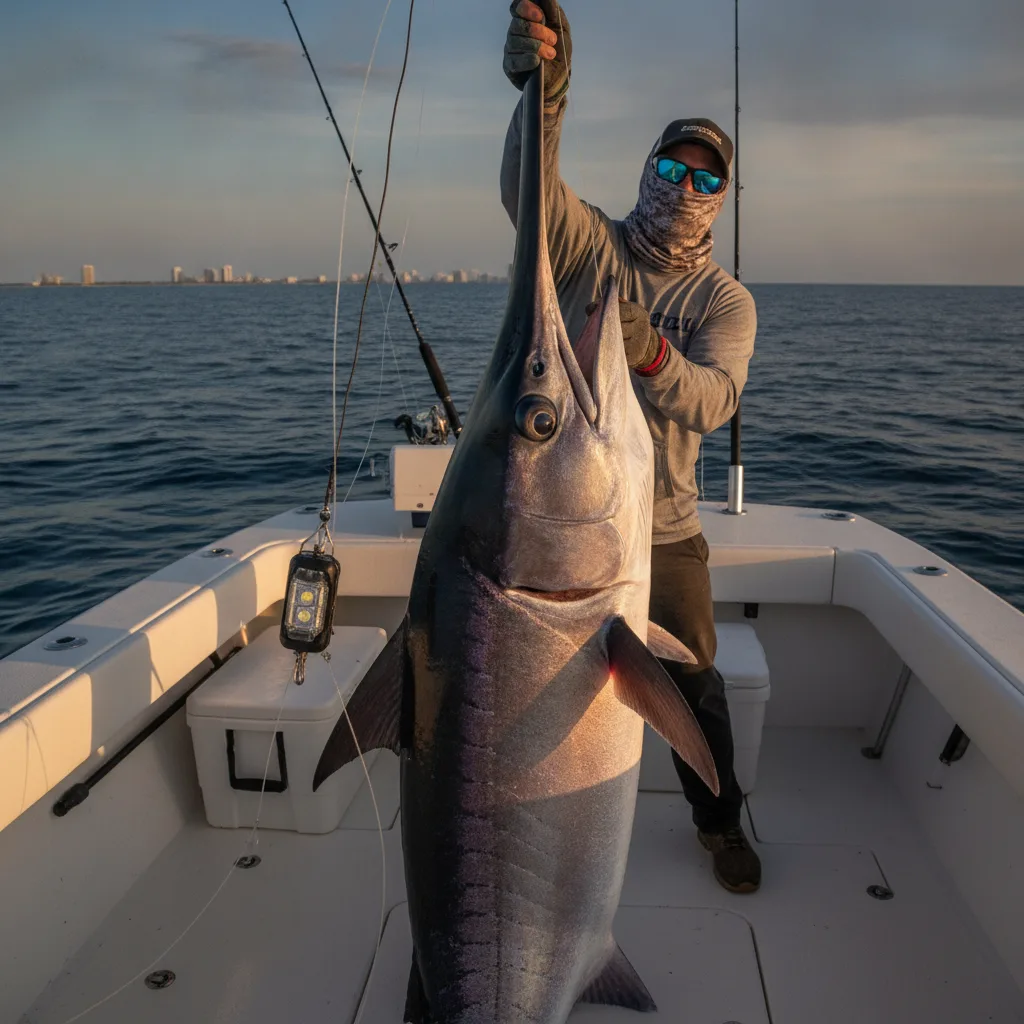
Bait is a rigged squid, a bonito belly strip, or a fresh-frozen eel. Every rig gets an LED strobe clipped 20 feet up the leader so fish can find it in the black water. A 6 to 10 pound sash weight is attached on a breakaway rubber band, so once a sword eats it snaps off and the fight is fair.
We deploy a marker buoy at the drop, then let the boat drift with wind and current while the bait tracks along the bottom. The electric reel handles the retrieve, which is a mercy at 1,800 feet, but the fight itself is all you. Expect an hour or longer on a good fish.
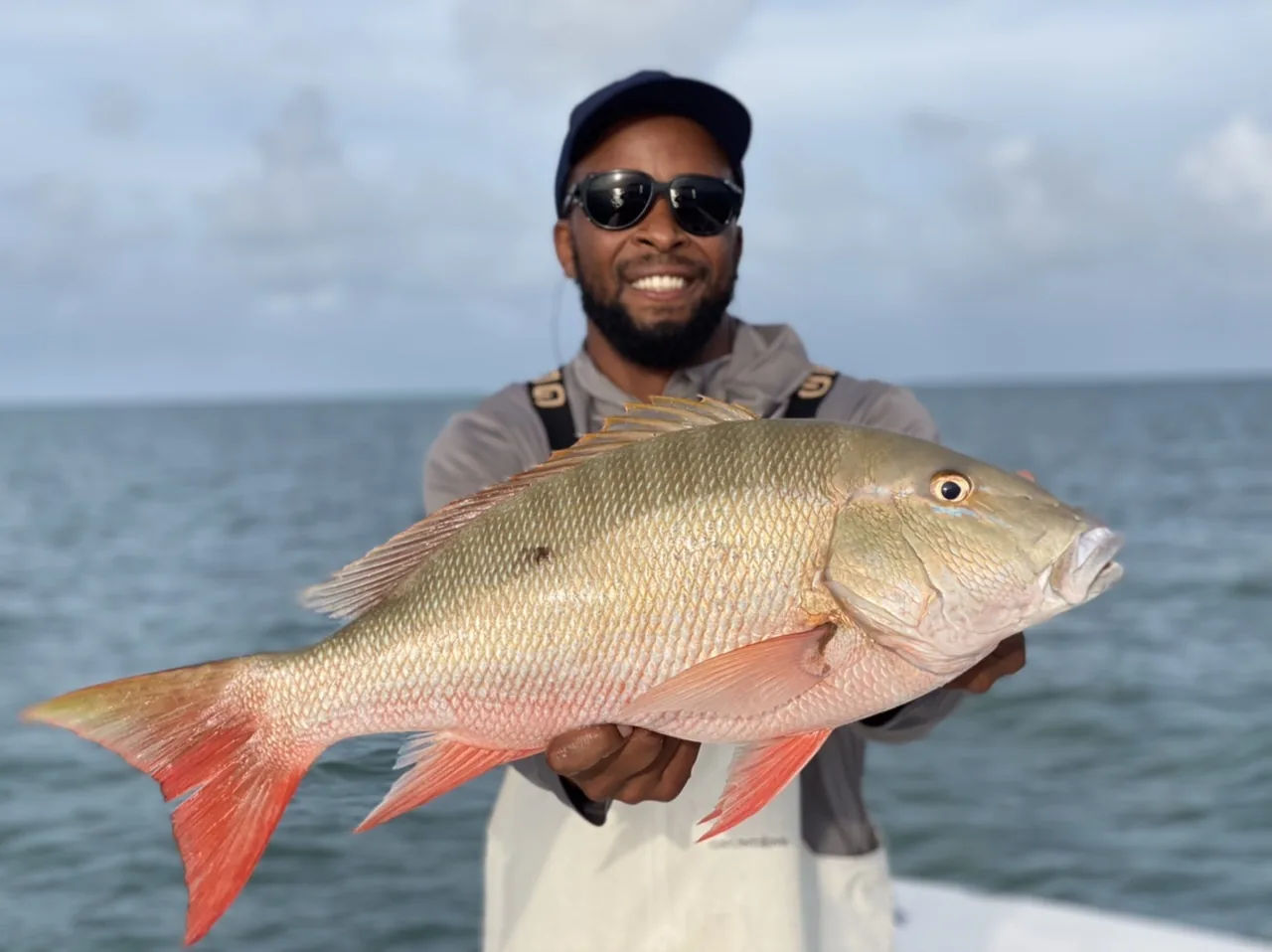
Bycatch on the daytime program is a serious bonus. Snowy grouper, big tilefish, and escolar all live in the same water column, and any of them can bend a rod hard. If you want to add straight Fort Lauderdale deep-drop and bottom fishing to the second half of the day, we can pivot easily.
NIGHTTIME DRIFT SWORDFISHING, EXPLAINED
The nighttime program is the classic approach and the one most anglers picture when they think broadbill. We leave the dock around 4 or 5 PM, run out to 1,200 to 1,800 feet of water, and set a spread of baits at multiple depths as the sun drops.
Tackle is stand-up 50 to 80 pound class, no electrics. Baits are rigged whole squid or, when we can get them, live goggle eyes. Each leader carries a glow stick, and each line runs to a lit float set anywhere from 100 to 400 feet down. That vertical spread covers the water column so a rising fish finds something.
Swordfish are natural night feeders. They ride up out of the depths after dark chasing squid, and the strikes are aggressive. The tell is visual: one of your float lights simply disappears. Setting the hook in the dark, with the reel screaming and the glow stick tracing an arc across the surface, is the reason people book this trip in the first place.
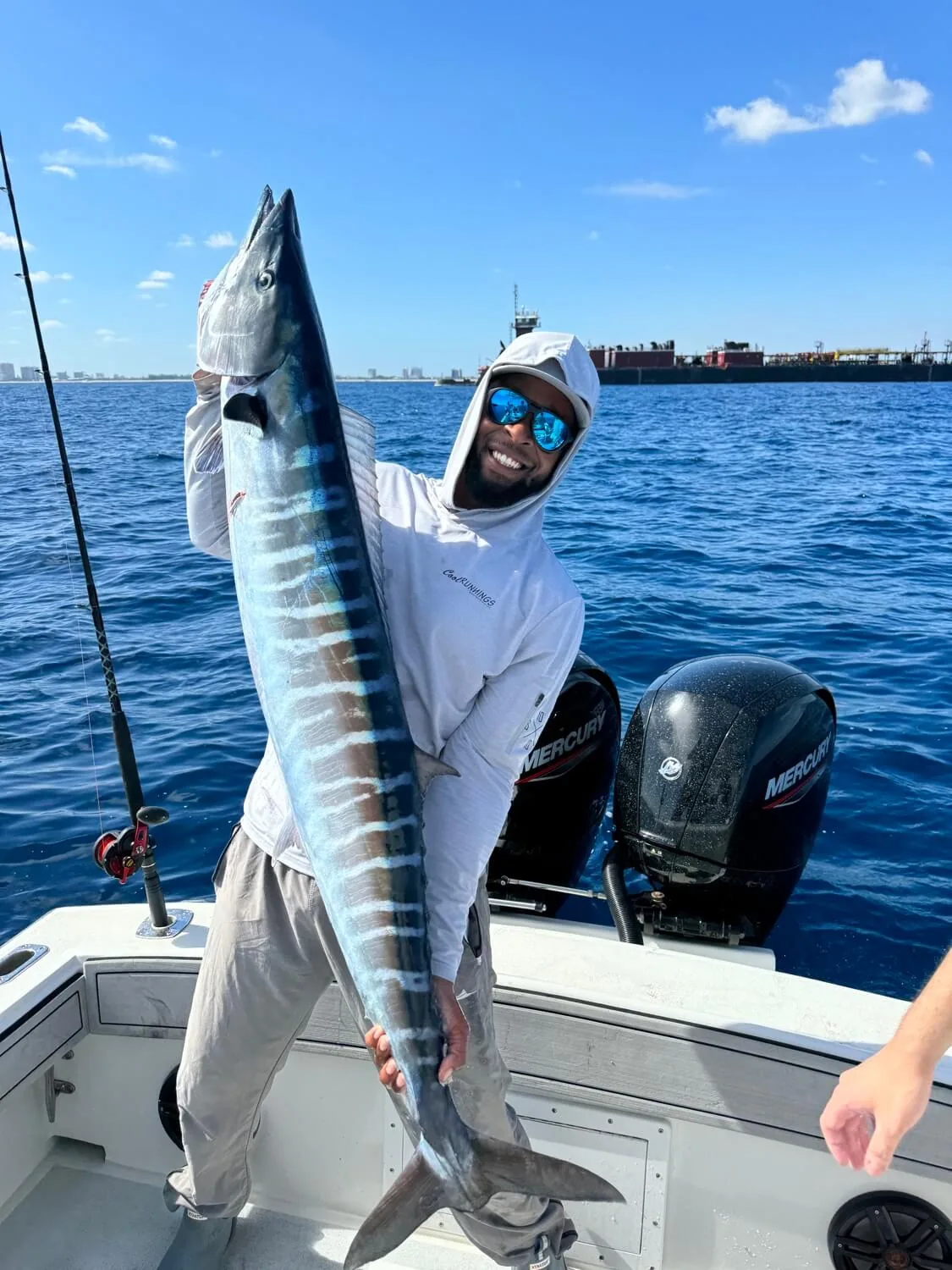
We usually fish until 11 PM or midnight, then run home. Shorter window than a daytime charter, but the intensity is higher. For a look at how nights on the water photograph, the Cool Runnings sword and offshore gallery has a stack of them.
GEAR, COST, AND WHAT EACH TRIP INCLUDES
Both trips are full-boat charters up to six anglers on the Contender. Bait, tackle, fuel, ice, license, and mate are included. You bring food, drinks, and a jacket for the night trip because the run home in October can get chilly.
Daytime deep-drop runs 8 hours minimum. You need time to reach depth, work three or four drifts, and get back before dark. Because the electric reels, sash weights, and specialty rigs are expensive to run, the daytime program is priced slightly above a standard offshore day.
Nighttime drift is typically a 6 to 7 hour trip. Less fuel, less rigging loss, so the ticket is closer to a standard trolling charter. Full numbers on both options live on the Cool Runnings full charter rates and inclusions page.
BEST MONTHS FOR EACH APPROACH
Daytime swordfishing works year-round off Fort Lauderdale, but May through October is prime. Water is warmer, drifts are longer and cleaner, and the bite window stretches. Winter daytime trips still produce, especially on flat cold-front lulls, but sea state matters more.
Nighttime drifting is a summer game for a reason. Calm nights are safer, more comfortable, and let the float lights stay upright and visible. April through October is the sweet spot. If you are looking at a fall booking, the September fishing report for Fort Lauderdale and the fall wahoo run breakdown both tie in with sword timing.
Overlap season also helps because we can combine species. A morning of trolling for mahi and wahoo followed by an afternoon slide into deep-drop water works well in summer. For the bigger picture, the best-time-to-go-offshore breakdown covers South Florida season by season.
WHICH ONE SHOULD YOUR GROUP BOOK?
Book the daytime trip if you want a longer, more traditional charter, a more predictable bite, and the freedom to layer in bottom fishing on the same run. Groups that include kids or first-time offshore anglers often prefer it because you can see, you have snacks, and nobody has to fight seasickness in the dark.
Book the nighttime trip if you want the cinematic version. Stand-up tackle, glow sticks on the leader, float lights vanishing in the black water, and a shorter, harder-hitting window. Experienced anglers usually gravitate here because the strike itself is the memory. Our offshore fishing charters out of Fort Lauderdale menu lists both formats.
Groups traveling in from north or south also fit both programs. Pickups from Hollywood charter fishing and Pompano Beach offshore charters are common on either format, and the run to the sword grounds is roughly the same.
BOOK A FORT LAUDERDALE SWORDFISH TRIP
Whichever program fits your crew, the season is open now and calendar dates move fast once the summer moon phases come into view. If you are still deciding, call me and we will talk through weather, tides, and which trip matches your goals.
Text or call the boat at (954) 806-0005, or lock in a date through the Cool Runnings booking calendar. I will match the technique to your group and put you on a fish.