WHAT MIAMI SEAS ACTUALLY LOOK LIKE
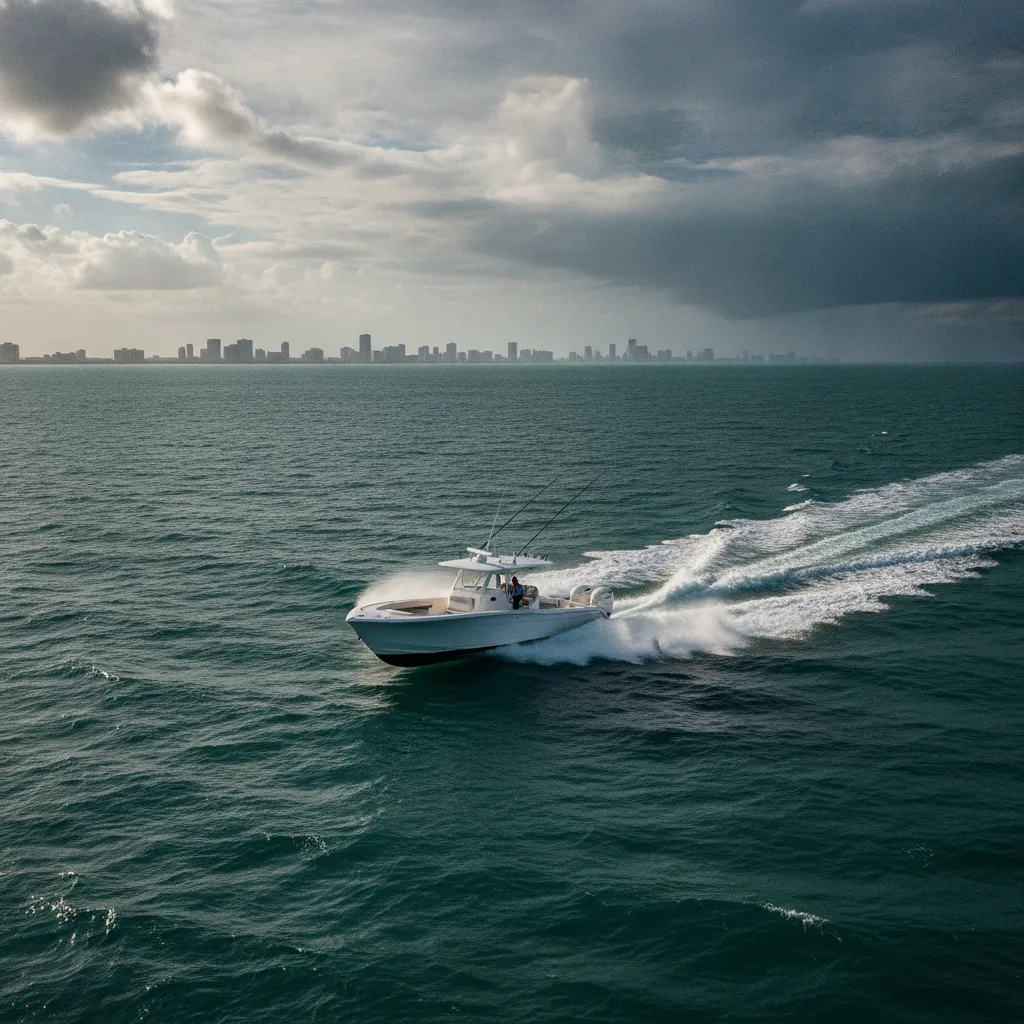
The honest answer most anglers want first: Miami offshore water is usually fishable, but it has a personality that shifts by season. Summer mornings tend to lay down flat, often 1 to 2 ft with a long swell period and light easterly trades. I like to push off at first light because that glassy window is real and it stretches well past the reef line.
By early afternoon in July and August, the heat builds inland and pop-up thunderstorms can stack along the Everglades. Those cells drift east and occasionally clip the coast. We watch radar all morning and we are usually back at the dock or on the inside before anything serious arrives.
Winter is a different story. Cold fronts roll through every 7 to 10 days from December through February. The two days behind a front bring 15 to 20 knot northerlies and a short, stacked 4 to 6 ft sea state that is not fun for guests. The three or four days between fronts often deliver the cleanest sailfish water of the year.
Spring and fall sit in the middle. Easterly trades blow most days at 10 to 15 knots, building a 2 to 3 ft chop on top of an underlying swell. The Gulf Stream keeps the water warm and the bait stacked, so even on a bumpier ride an offshore fishing day is usually worth it.
HOW I READ THE FORECAST
Weather calls start three to four days out and tighten each morning. NOAA's marine forecast for the waters from Jupiter Inlet to Ocean Reef is the backbone. I cross-check it against WindyApp's ECMWF model and Buoyweather's swell breakdown for the offshore buoys.
Wind speed alone does not tell the full story. A 12 knot easterly on a 9 second swell period rides like a lake. The same 12 knots on a 4 second period feels like a washing machine. Period matters as much as height, and it is the number most weather apps bury.
Satellite imagery rounds out the picture. I watch the cloud tops and the inland heating signature to gauge thunderstorm timing. For Miami charters, that morning radar sweep usually decides whether we run a full day or shift to a half day window.
The call goes out the night before the trip. If the forecast looks unsafe or just plain unpleasant, you hear from me by 8 pm with options to reschedule at no charge.
WHY MIAMI IS EASIER THAN MOST OFFSHORE PORTS
Miami has a geographic advantage that most offshore fisheries do not. The Gulf Stream rides within 3 to 5 miles of the beach, which means you reach blue water in 15 to 20 minutes. There is no two hour pounding ride to the fishing grounds the way there is in many Gulf or northeast ports.
The sailfish ledges in 600 ft of water sit inside a 30 minute run from Government Cut. Mahi schools push close on the weed lines, kingfish stack on the reef edges, and blackfin tuna show on the humps a little further south. If the sea state stiffens up, we have the option to tuck inside and work bottom fishing lines on the patch reefs in 60 to 120 ft.
That short run also means we can react. If a squall builds offshore, we are 25 minutes from the dock at cruise. If the bite turns on north of Haulover Inlet, we can be there in time to fish it. Anglers running out of Fort Lauderdale get the same proximity advantage from Cox Landing, which is where the boat lives.
Biscayne Bay and the lee of Stiltsville also give us protected water if we need to start the day inside before the wind clocks around. That flexibility is why Miami runs more trips per season than most offshore ports in the country.
PREVENTING SEA SICKNESS BEFORE IT STARTS
Motion sickness is the single biggest reason a fishable day turns into a miserable one. The good news is that it is largely preventable if you prep the night before, not the morning of. I have watched this work on hundreds of trips.
Take a non-drowsy Bonine or Dramamine the evening before the charter. The active ingredient needs hours in your system to do its job. Taking it in the parking lot at 6 am is too late and it just makes you sleepy.
Eat a real breakfast with protein and carbs. An empty stomach is far worse than a full one out there. Skip the heavy coffee and the orange juice, both of which sit poorly when the boat is rolling. Water and a banana go a long way.
Once we are running, keep your eyes on the horizon and stay on deck. Looking down at a phone or rummaging in the cabin is where most guests lose it. Ginger chews, saltine crackers, and slow sips of cold water reset most queasy stomachs inside 20 minutes. Our charter info breakdown lists everything we keep stocked on board.
THE BOAT MAKES A REAL DIFFERENCE
Not all 32 ft boats ride the same. The Contender hull is a deep V designed for the Atlantic, and it carries that deadrise all the way back to the transom. In 3 to 4 ft seas, it slices instead of slamming, which is the difference between a comfortable day and a beating.
Twin Yamaha 300s give us 600 hp of clean four-stroke power. That matters in two ways. First, we can run at a speed that matches the sea state instead of being stuck at displacement. Second, redundancy is a safety floor that single-engine boats do not have.
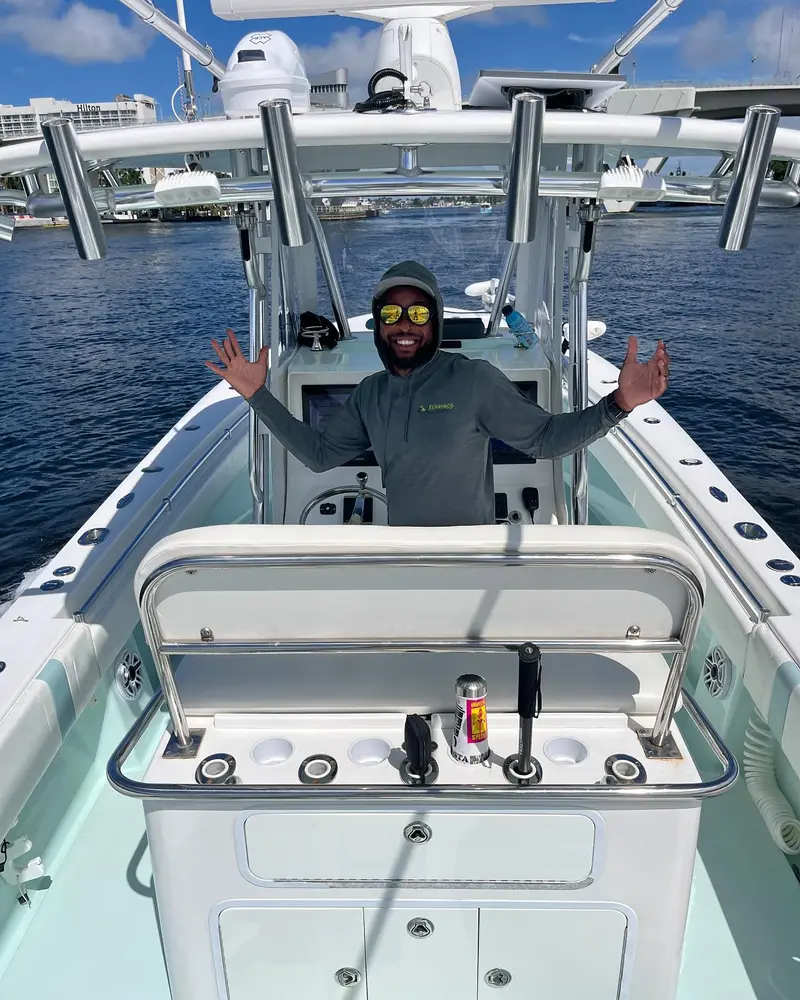
The cockpit is wide and open, with high gunwales and a dry ride for the anglers fishing the stern. There is shade under the T-top and a head in the console for guests who need a break. Four anglers fish comfortably and a family of four has room to spread out.
Compared to a smaller center console or a slower sportfisher, the Contender hits the sweet spot for Miami waters. It handles the chop, gets us to the fish quickly, and stays dry enough that guests are still smiling at lineup time.
RESCHEDULING, REFUNDS, AND THE NIGHT-BEFORE CALL
I will not run a trip I would not put my own family on. If the forecast crosses into unsafe territory, the call is made the night before and you reschedule at no charge. That policy is in writing and it has never been a fight.
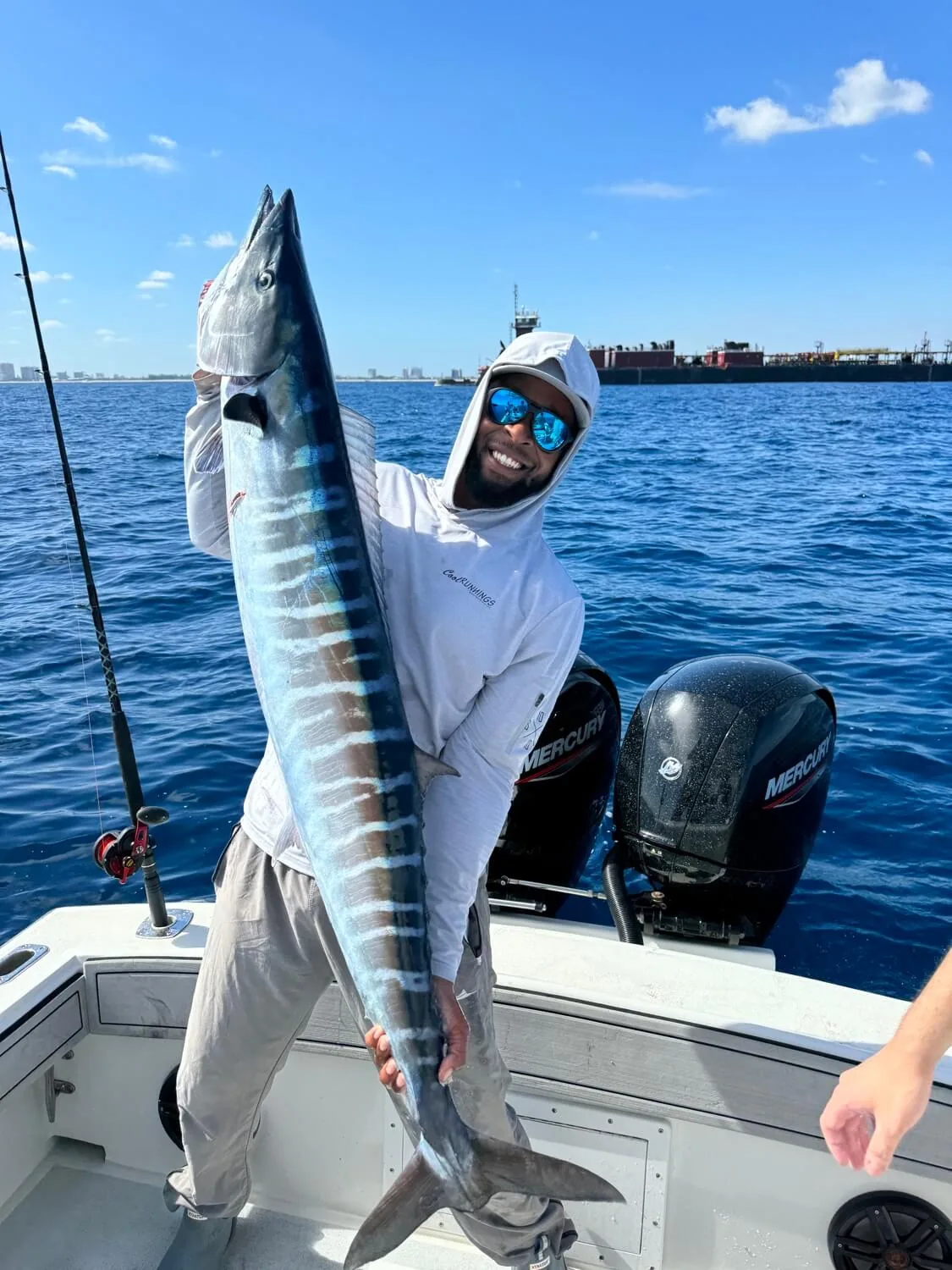
The gray zone is the bumpy-but-fishable day. We will tell you straight what the ride is going to feel like and let you decide. Some guests want to push through 3 ft seas for a shot at a marlin or wahoo. Others have kids on board and would rather move the date.
If weather goes sideways after we leave the dock, we shorten the trip and pro-rate the unused time. That is rare but it happens, especially during summer thunderstorm season. You never pay for time we did not fish.
Anglers planning a calmer trip can also dig into when the Miami offshore bite peaks. Picking the right month is half the battle.
BOOK A DATE WITH THE FORECAST ON YOUR SIDE
Summer dawn trips off Miami ride about as flat as offshore water gets, and the Contender soaks up the afternoon chop when the trades fill in. I make the weather call the night before, so you are never gambling on a rough morning. If the sea state looks ugly, you reschedule at no charge and we put you on a cleaner day.
Call (954) 588-0578 or send dates through the Cool Runnings booking calendar and we will walk you through the next two weeks of forecast windows. Pack smart with our guide to what to bring on a Miami fishing charter and we will see you at the dock at first light.
FREQUENTLY ASKED QUESTIONS
What sea state is too rough to fish offshore from Miami?
I draw the line around sustained 5 ft seas on a short period, or sustained winds above 20 knots. Below that, the 32 ft Contender handles the ride and the fishing stays productive. Anything above gets rescheduled at no charge the night before.
How far offshore do we run from Miami?
The Gulf Stream sits 3 to 5 miles off the beach, so blue water is a 15 to 20 minute run. Sailfish ledges in 600 ft of water are inside 30 minutes from Government Cut. You spend the day fishing, not commuting.
When should I take sea sickness medication?
Take non-drowsy Bonine or Dramamine the evening before the trip, not the morning of. The active ingredient needs hours to absorb. Eat a real breakfast, sip water, and keep your eyes on the horizon once we are running.
What happens if the captain cancels for weather?
You reschedule at no charge to any open date that works for your group. The call comes by 8 pm the night before with the forecast breakdown. If weather forces us back early after we have already left the dock, unused time is pro-rated.
Is Miami offshore fishing rougher than Fort Lauderdale?
The two are nearly identical because the same Gulf Stream and trade wind pattern drives both ports. Miami sits 25 miles south, so cold fronts in winter sometimes weaken slightly by the time they arrive. Day to day, sea state is the same within a foot.